Something In Yoga For Everybody

joy held yoga book photo's 016

There is Something In Yoga For Everybody

There are five primary areas of practice to the Writer Wellness plan. Relaxation/meditation, creative play, fitness and exercise, journaling, and nutrition.

The physical component of yoga is called “hatha yoga.” The word “hatha” is Sanskrit for physical. There are essentially 24 basic poses in hatha yoga and many, many variations on them thus creating hundreds of poses altogether. There are also ways to modify the basic poses so anyone can participate in some level of hatha yoga. This is where yoga therapy comes into play.

All yoga is therapeutic in a sense because of the breathing, stretching and mental practices, but the physical acts of the poses also called asanas, can be changed up slightly to make them accessible to almost everyone.

Disclaimer alert: this article is not meant to replace the guidance of your healthcare practitioner. Always consult such persons before engaging in activity to be sure your condition warrants participation in an organized exercise regime of any kind.

That said, besides talking with your doctor first, here are three books to give you an idea of what might be available to you.

Recovery Yoga, A Practical Guide for Chronically Ill, Injured, and Post-Operative People, Sam Dworkis, Three Rivers Press, New York, 1997. This book covers breathing and movements in a variety of positions. Once you have understood any limitations your doctor recommends, you can choose exercises done sitting, standing, lying down, and on the floor. Dworkis is an Iyengar trained yoga teacher and the B.K.S. Iyengar tradition of hatha yoga originated the practice of modifying yoga poses through the use of props such as chairs and bolsters. His program is called Extension Yoga.

http://www.extensionyoga.com/

Yoga As Medicine, The Yogic Prescription For Health and Healing, Timothy McCall, M.D., Bantam, New York, 2007. McCall is a doctor and a yoga practitioner and the medical consultant for Yoga Journal Magazine. It includes practice routines and advice on using yoga to help with several conditions such as back pain, cancer, chronic fatigue syndrome, depression, fibromyalgia, and multiple sclerosis.

http://www.drmccall.com/

Yoga for Movement Disorders, Rebuilding Strength, Balance and Flexibility for Parkinson’s Disease and Dystonia, Renee Le Verrier, BS, RYT, Merit Publishing International, Florida, 2009. The author of this book suffers from Parkinson’s Disease and practices what she preaches. Every pose is prop assisted and the system is explained very clearly. The photos are very clear and the poses are adaptable to more than Parkinson’s. Highly recommended.

http://meritpublishing.com/

My book Writer Wellness, A Writer’s Path to Health and Creativity includes chapters on yoga for writers. Basic poses like Triangle are shown modified in Writer Wellness for use by almost everyone.

Best wishes to you for continued health through movement.

Have you found an interesting way to keep physically active?

Be well, write well.

~hugs,

Joy

JoyHeldHeadshot3

Joy E. Held is the author of Writer Wellness, A Writer’s Path to Health and Creativity, a college educator, blogger, and yoga/meditation teacher. Her work has appeared in numerous publications including Romance Writers Report, Dance Teacher Now, Yoga Journal, and Woman Engineer Magazine.

Photo: K. Held

Copyright 2018, Joy E. Held

GUEST POST: There Is Enough-For Everyone

Welcome KATHERINE DOWN, a fellow student at Seton Hill University. Katherine realized an uplifting moment during the recent January  2017 MFA residency. It falls right in line with the positivity ideal of Writer Wellness.

“There is Enough — For Everyone”

By: Katharine Dow

THE LAST BOOKSTORE riley-mccullough-152713


Bookstores are my favorite places in the world. Inside each new book is the promise of adventure, magic, and wonder. To quote C.S. Lewis, “You can’t get a cup of tea big enough or a book long enough to suit me.”

However, there are days when I blink, and the beauty of endless possibility disappears. Instead of a sacred space, the bookstore transforms into a nightmare in which the cacophony of millions of words written by superior writers drowns out my small, humble contribution to Story. In those moments, I remember the devastating suicide note in Thomas Hardy’s Jude the Obscure, “Done, because we are too menny.” In those moments, I feel that there are too many books in the world for my books to matter, and I am a fool to try.

During a recent class on Emotion, taught by Maria Snyder at Seton Hill University’s MFA in Popular Fiction Program, we were asked to write down a list of our protagonists greatest fears. As I created my list, I realized that the root cause of each of my protagonist’s fears is the belief that there is only so much good in the world, life is a zero-sum game, and that if she doesn’t achieve the goal, her future is grim.

I realized in that class that I have a choice. I can believe, as my protagonist believes for the majority of the book, that the world of story is like a pie, with only so many pieces to be had, and none left for me. Or, I can choose to believe, in the immortal words of the band Midnight Oil, that “there is enough—for everyone.”

According to quantum physics, reality occurs on two levels: possibility and actuality. It suggests that there exists an entire world of possibilities, material as well as in meaning, and in feeling. If so, life is a series of choices and possibilities that are deeply and fundamentally creative. There is no one option. There is no last piece of the pie. It’s a theory we would all do well to embrace.

KAT DOW HEADSHOT 1606924_10152596584703782_446171816_n

Katharine Dow is a global nomad who has lived in eight countries as a student, aid worker, and diplomat. In 2017, she set her passport aside and enrolled in the MFA in Popular Fiction program at Seton Hill University, a choice which has become the most unpredictable and challenging adventure of all. You can find her under the twitter handle @suggestionize.

Thanks, Katherine!

Be well, write well.

~hugs,

Joy

JoyHeldHeadshot3

Joy E. Held is the author of Writer Wellness, A Writer’s Path to Health and Creativity, a college educator, blogger, and yoga/meditation teacher. Her work has appeared in numerous publications including Romance Writers Report, Dance Teacher Now, Yoga Journal, and Woman Engineer Magazine.

Photo: K. Held

Copyright 2018, Joy E. Held
cropped-writer_wellness_cover3

GUEST POST: Staying Productive in the Cold

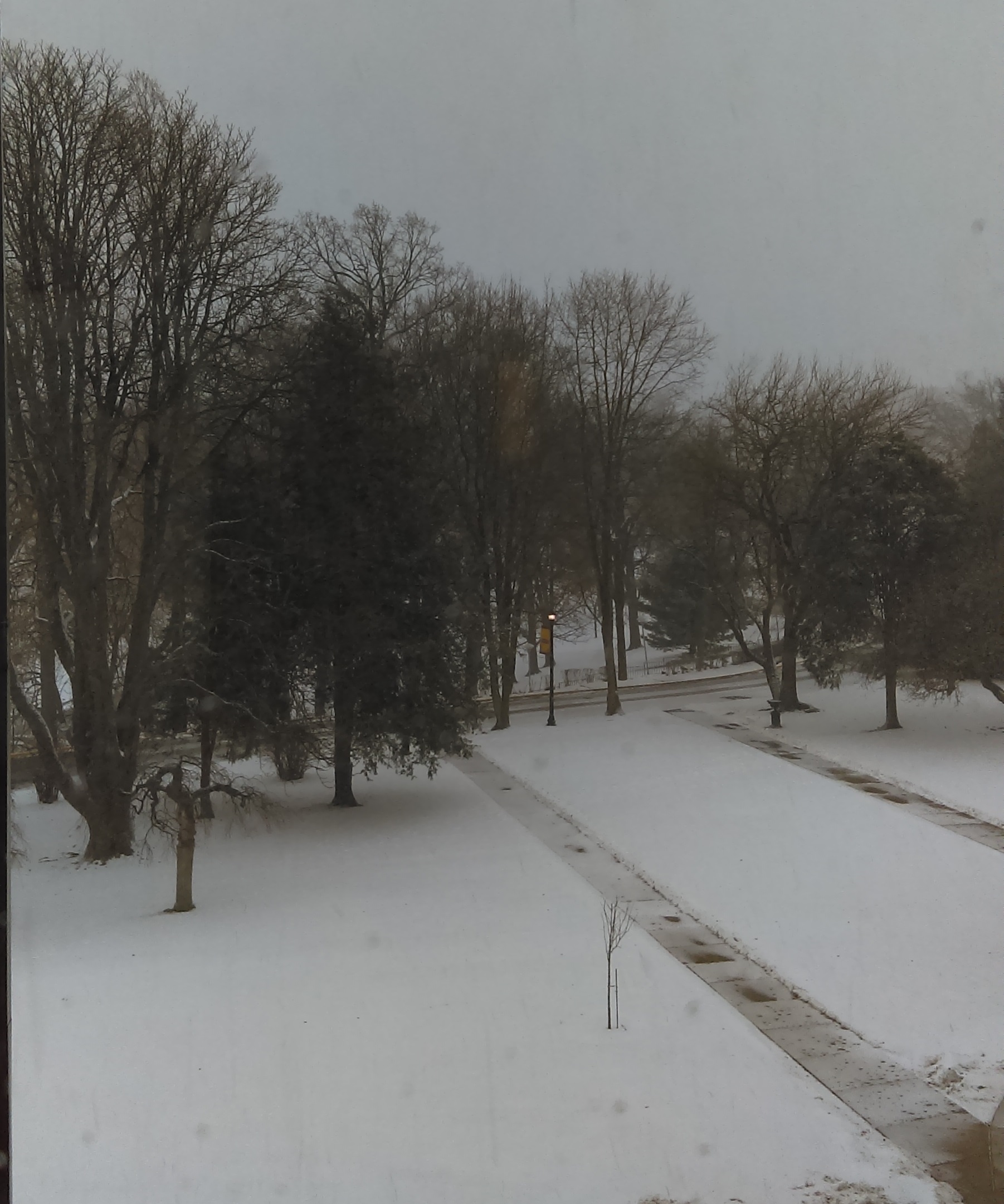
Snowy Greensburg J.D. Cook

Welcome J. D. COOK, a fellow student at Seton Hill University. It gets pretty chilly in January during residency in Greensburg, PA, but J. D. sees some benefits. Read on!

“Staying Productive in the Cold”

By: J.D. Cook

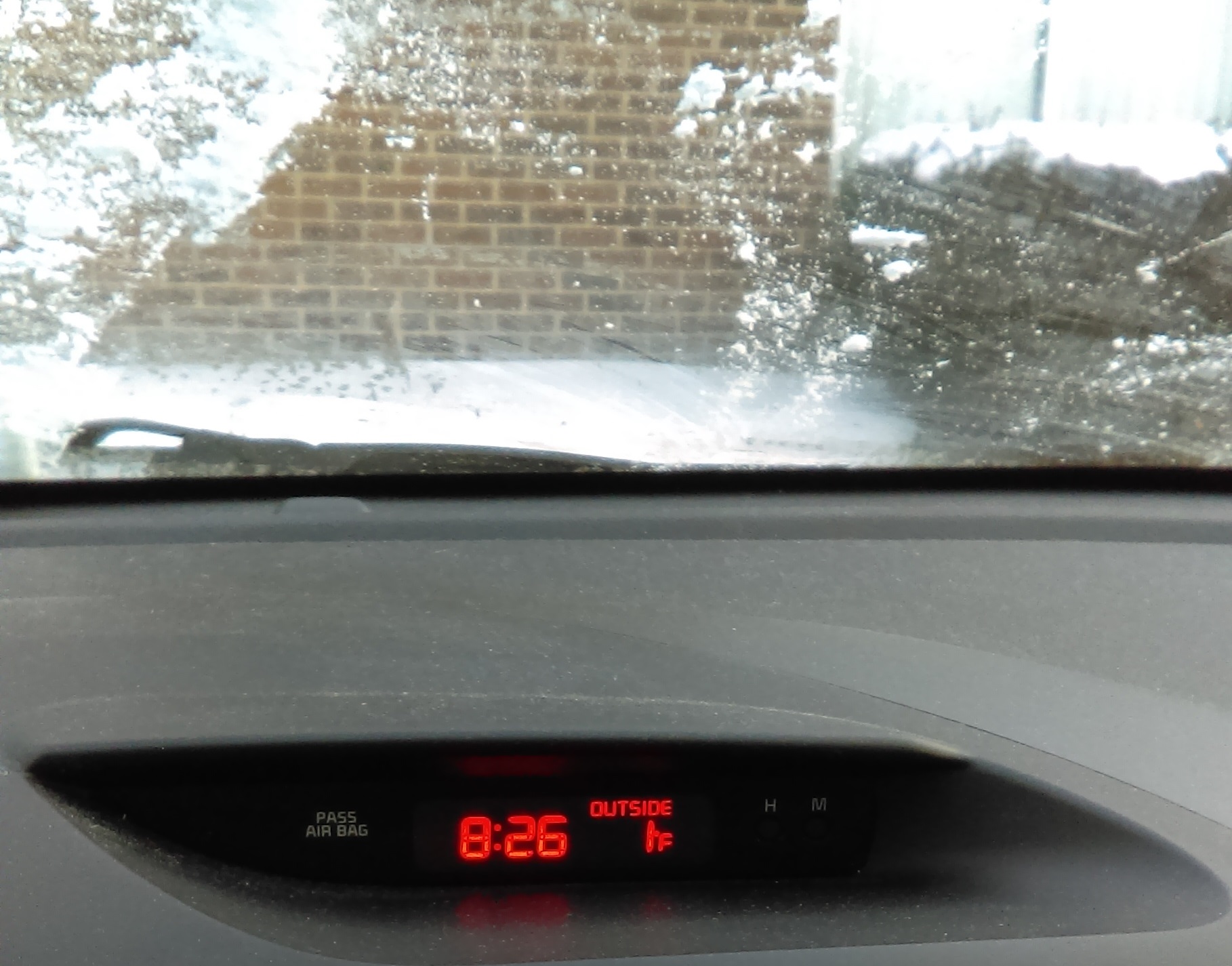
This past January the Seton Hill Writers in Popular Fiction Residency reached sub-zero temperatures. There was some delightful snow and ice on top of that. Additionally, my hotel sat on a large hill, the city of Greensburg is filled with hills, and Seton Hill is, obviously, on a hill. Suffice it to say; my car did a fair amount of sliding. I may or may not have seen my life flash before my eyes a few times, but when all was said and done, I managed to make a productive week of it. How is that, do you ask?

Low Temps J.D. Cook

Well, since it was so cold no one wanted to spend a lot of time outdoors. Networking was at a minimum, and I only went out to eat with friends once. So, I did what any writer should do when trapped by nasty weather. I wrote. I didn’t outline any new novels, and I didn’t make any major plot breakthroughs, but I did grind away at some revision ideas. Additionally, I accomplished something I’m not sure I’ve ever really done before.

I wrote, read, and got assignments done while away from the comfort zone of my desk. Most writers should be familiar with the odd sense of Zen that pervades their desk. I’ve taken this to a ridiculous extreme by refusing to part with the desk I’ve written on since middle school. It’s a little beat up, but I’ve done my best work on it by golly. So, you can understand how big of an accomplishment this was for me.

While writing away from my desk was new for me, the wintry weather was not. I hail from the mountain town of Hazleton, which is one of the highest elevated cities in the state. The thing about the extreme cold is that you have no excuse not to hunker down and focus on your writing, or reading. You can’t say, but it’s such a lovely day, and I need to be seizing it. You can’t say that you should be seeing that movie everyone’s discussing. No, you are stuck inside, and as long as you don’t go all ‘Jack Torrance in the Shining’ on anyone, you should be able to get whatever you need to do done. It can be incredibly relaxing just to let go of the outside world for a few hours and focus on a single thing in your house, or in my case a hotel room.  Then, when you come out of your isolation, you’ll leave with a newfound sense of accomplishment.

Overall, the January Residency is usually freezing. It’s a good counterpoint to the June Residency, which is carefree and warm. In January you get to spend more time doing the dirty work of writing. You get to hunker over a hotel room desk doing work. There’s something just as wonderful about that as there is about mingling with my fellow writers, but I could still do without the icy roads.

J. D. Cook Headshot

-J.D. Cook is a Creative Writer in Training. If you are interested in learning more about his journey check out www.jeremiahdylancook.com

Thanks, J. D.

Be well, write well!

~hugs

Joy

JoyHeldHeadshot3

Joy E. Held is the author of Writer Wellness, A Writer’s Path to Health and Creativity, a college educator, blogger, and yoga/meditation teacher. Her work has appeared in numerous publications including Romance Writers Report, Dance Teacher Now, Yoga Journal, and Woman Engineer Magazine.

Photo: K. Held

Photo: J. D. Cook

Copyright 2018, Joy E. Held

cropped-writer_wellness_cover3


Word Power: IDIOT

GOOFY BIRD ray-hennessy-229596 (1)

What’s In a Word?

There are five primary areas of practice to the Writer Wellness plan. Relaxation/meditation, creative play, fitness and exercise, journaling, and nutrition.

Word power is an occasional comment from me on–words. My love of words is one of the reasons I became a writer.

I’ve never been a fan of the word “idiot.” It is the ultimate insult to someone’s intelligence in most circles. But words, particularly prickly ones like ‘idiot,’ get popularized through overuse by a group or a celebrity or some other pop culture phenomenon. Apparently, “idiot” is a new favorite word in the world of entertainment.

There is the Alpha Books series “The Complete Idiot’s Guide to fill-in-the-blank” http://www.idiotsguides.com/

My daughters loved the Broadway musical “American Idiot,” a rock opera performed by the group Green Day.

http://americanidiotonbroadway.com/

And there’s the “Idiot Proof Diet” with a picture of a cartoon character saying, “I’m a certified idiot,” with a big smile on her face.

http://idiotproofdiet.com/

I mean, who wants to be an idiot? It’s the greatest reverse psychology marketing idea ever, isn’t it? You don’t want to be an idiot so you need the information or the product in your arsenal to prove you aren’t an idiot.

But then two comedians (Ricky Gervais and Stephen Merchant) come up with an idea for a television show called “An Idiot Abroad.” And even though the word idiot still rubs me the wrong way, this reality series is hysterical in a funny and perhaps a not so funny way.

http://www.imdb.com/title/tt1702042/

While he’s never actually referred to as the idiot, Gervais and Merchant have convinced Karl Pilkington to visit the seven wonders of the world because he’s a stay-at-home-and-happy-to-be-there Brit who’s not the most culturally aware fellow you’ll ever meet. Or maybe he is. What’s so funny is seeing yourself in what he says and does in all these countries when faced with some culturally bizarre (by some terms) foods, customs, and traffic. Imagine Archie Bunker getting a back wax in Brazil so he can wear a Samba costume to Carnivale. That’s Karl Pilkington, just no recliner or cigar.

For instance, not too long into the travels, he becomes obsessed with toilets when he discovers that they are not the same abroad as he’s used to at home. He hates crowds, parties, and planning, so everywhere he goes Gervais and Merchant have arranged for Pilkington to participate in some major cultural phenomenon that tests his patience and sometimes his stomach. Mostly what Pilkington does is complain. He witnesses the giant statue of Christ the Redeemer in Brazil and all he has to say about it is the price of a can of Coke is too much, and they can get away with it because there is nothing to compete with.

Needing a voice of reason among the cackles, I turn to Webster. “Idiot, n. 1. Psychol. A person of profound mental retardation.” Just when I think this isn’t going to help, I read, “No longer in scientific use and considered offensive.”

In my opinion, it is ignominious to call someone an idiot. What’s your opinion on the word idiot?

Be well, write well.

~hugs,

Joy

JoyHeldHeadshot3

Joy E. Held is the author of Writer Wellness, A Writer’s Path to Health and Creativity, a college educator, blogger, and yoga/meditation teacher. Her work has appeared in numerous publications including Romance Writers Report, Dance Teacher Now, Yoga Journal, and Woman Engineer Magazine.

Photo: K. Held

Photo by Ray Hennessy on Unsplash

Copyright 2018, Joy E. Held

Am I Meditating?

How Do You Know If You’re Meditating?

IMG_1504


There are five primary areas of practice to the Writer Wellness plan. Relaxation/meditation, creative play, fitness and exercise, journaling, and nutrition.

“Success is never a destination—it’s a journey.”                 ~Satenig St. Marie,

Unless we have a homemade brain wave monitoring machine, we usually don’t have the means to measure our level of success with meditation in a scientific sense. We can feel certain changes and measure them to a degree. The average meditation journey should experience three specific measurable stages:

1.Tension-this is where we notice just how tight our jaw bones are, how sore our backs are and how busy our minds tend to be.

2.Letting go-this is when we notice some of the tension releasing and our breathing is slowing down.

3.THERE-this is when we become aware of very few things, less and less bothers us physically and mentally we realize our thoughts have slowed down, and we can control whether or not we want to follow monkey mind down its ragged path. We do not follow monkey mind.

These stages coincide with known and studied brain wave activity.

1.Tension = Beta (busy, busy, busy mind)

2.Letting go = Alpha (focused awareness on our breath and what it’s doing, fewer thoughts)

3.THERE = Theta (just about to cross the hazy boundary into slumber-ville)

Sleep isn’t meditation, and theta is the gatekeeper of sleep, so the goal is to remain relaxed and aware at the alpha level. Regardless of how messy the day has been, a successful meditation session need only give us a conscious pause from the issues we’re dealing with and that’s enough. Yep. It only takes a few minutes a day to meditate successfully. But what does a successful meditation practice “feel” like?

087

This brings up the question of goals. Should we have goals where meditation is concerned? Is it better to let things take their course and follow along?

Like yoga, meditation is a blend of healthy balance. It’s right to set a goal to meditate for a specific amount of time each day. It’s right to practice particular habits like sitting still and watching breath flow. But it isn’t right to set expectations beyond the realm of the realistic. Why? Because unlike measuring the fact that our brain activity actually slows down during meditation, it creates more stress to attach a measurement or a benchmark for meditation. “If I don’t find perfect peace in my life in three months of meditating, I failed and will give up meditating.” Or “I should notice a major shift in my actions in a set period of time, and if I don’t I will stop meditating because it just isn’t for me.” These are normal examples of our “quick fix”, I-want-it-now mindsets, and this doesn’t work with meditation.

With meditation, the less you expect, the more you receive.

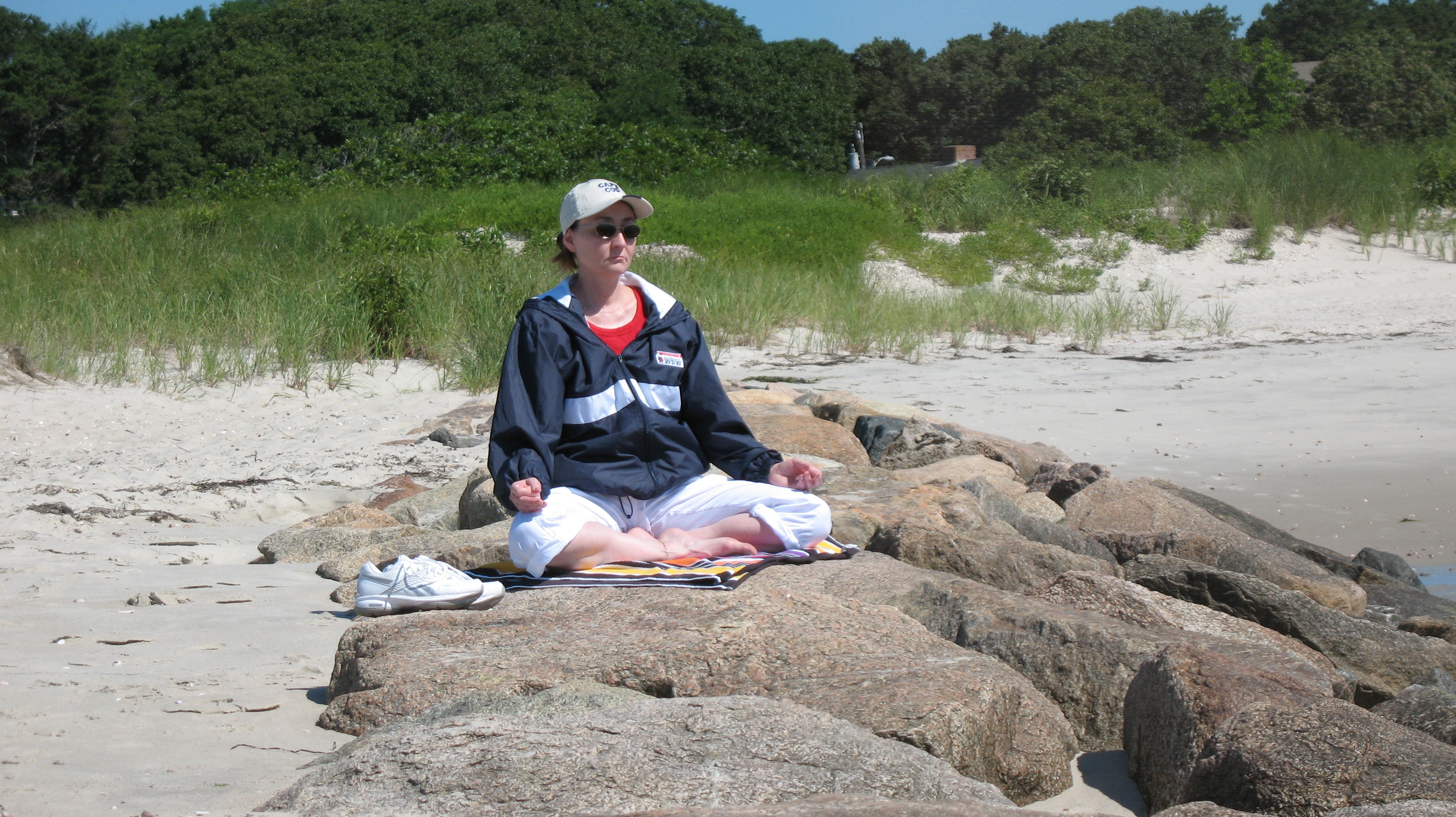
held120-R1-021-9

To answer the question of what successful meditation feels like, beyond the physical and mental releases (which may not feel gigantic, but they occur,) the positive results of regular meditation show themselves in our everyday actions.

1.We are more patient.

2.We smile more.

3.We laugh bigger.

4.We appreciate little things more.

5.We share more.

6.We hold the door more often.

7.We focus better.

8.We are healthier.

9.We are brave.

10.We trust more.

11.We think the best first.

12.We are less critical of ourselves and others.

13.We are more accepting.

14.We are more loving.

15.We are more truthful.

16.We are more understanding.

17.We are more creative.

18.We are more of who we were meant to be.

19.We are better drivers.

20.We are better listeners.

It’s a long journey worth every step. Do you have any meditation stories to share from your journey?

Be well, write well.

~hugs,

Joy

JoyHeldHeadshot3

Joy E. Held is the author of Writer Wellness, A Writer’s Path to Health and Creativity, a college educator, blogger, and yoga/meditation teacher. Her work has appeared in numerous publications including Romance Writers Report, Dance Teacher Now, Yoga Journal, and Woman Engineer Magazine.

cropped-writer_wellness_cover3

Photo: K. Held, 2011

Copyright 2018, Joy E. Held

Avoid These Seven Workout Mistakes!

IMG_1463

Avoid These Seven Workout Mistakes!

1.No pain, no gain- Listen to your body. Know when it’s had enough. This takes a great deal of practice, however, to know the difference between whining and warning. Better to pull back before something gets hurt.

2.Timing-an erratic workout schedule confuses your body and your brain. Try to exercise close to the same time each day.

3.Not enough exercise-it takes the body and brain up to twenty minutes just to warm-up and be ready to exercise. Devote enough time to your workouts to make them productive.

4.Talking too much- Focus on the workout for the body and don’t complicate things with comments or running conversations. Do focus on breathing.

5.Too much water-Drinking fluids during a workout can cause stomach cramps because when the liquid hits the stomach blood rushes to digest it. This drains valuable oxygen from the muscles which need it for energy. Drink before and after a workout but try to avoid drinking during the session.

6.Not enough recovery time-Plan exercise routines of varying intensities and space them out over several days.

7.The wrong clothing-Wearing improper clothing will interfere with the body’s ability to move safely. No jeans or big floppy shirts that cover your face when upside down in Downward Facing Dog pose. You need to breathe!

Do you have any workout experiences to share?

Be well, write well.

~hugs,

Joy

cropped-writer_wellness_cover3