
Reflective Writing and Springboards

Writer_Wellness_Cover(3)

My backgrounds are in journalism, creative writing, and education. I am or have been a teacher of dance, yoga, meditation, writing, health, history, and theatre. When I homeschooled my beautiful daughters for 18 years, I even dabbled in teaching science and math!

Regardless of the subject or setting, I ask students to pause on a regular basis and actively reflect on what they have learned. That reflection usually requires

  • writing about the experience of learning
  • examining how the learning fits into the current state of things for a student
  • how the newly acquired knowledge can be used in the future

This written self-exploration is what constitutes reflective writing over basic journal keeping. All forms of journal writing have value in my opinion. We are going to address journaling from this perspective to help you as a writer clarify your thoughts about life and work.

What Is Reflective Writing?

Reflective writing differs very little from other terms such as journaling, expressive writing, and creative journaling. What it does offer is a perspective on the practice of keeping a journal that defines the action as a way to collect, dissect, and reflect on a vast array of things. Everything from daily life to business documentation to emotional venting is fair game to go into a journal, but the sense of being more responsive to the writing and the events qualify journal entries to be considered reflective.

If you’re already a fan or regular practitioner of journaling, you will understand when journal therapy teacher Kathleen Adams says,

“There’s a friend at the end of your pen which you can use to help you solve personal or business problems, get to know all the different parts of yourself, explore your creativity, heal your relationships, develop your intuition…and much more. (13)

Essentially, reflective writing differs from basic journal writing because the writer writes about an experience, writes about any feelings, emotions, or ideas attached to the experience, then moves beyond the original experience to learn more and repeat the reflective writing practice.

What Are Journal Springboards?

What if you’re new to the idea of journaling, have reservations, or don’t know where to start? That’s where the “Springboards” journaling technique comes in handy. It’s the practice of responding in writing to a prompt, an unfinished sentence, a question, a “what if” statement, and it is a wonderful tool to keep the pen moving across the page or the fingers punching the keyboard.

How Do Springboards Help Writers Journal?

“What should I write about?” (a springboard in its own right,) isn’t a problem where springboards are present. They are easy to answer and easy to create. Simply write about whatever pops into your head in response to a springboard.

Let’s Ink About It Journal Activity

Choose a springboard prompt from the list and journal about it for at least 250 words or as long as you like. Do this as many times as you wish. Once a day for a week is a great way to establish a journaling habit. Simply pick a springboard, copy it into your journal and write free form without stopping. Remember to keep building on ideas as they pop up for you, and keep a lid on the inner critic!

There are three things I want to accomplish (today, this week, this year, etc.) are…


Right now, I’m feeling…


What I value most in my relationship with ___ is…


I’m proud of myself for…


Today was a (great, lousy, hectic, etc.) day because…


What I really want from ____ is…


I need to set better boundaries in the ___ area of my life because ___, and this is how I’m going to do it and why.


The best part about being me is…


The worst part about being me is…


If I could meet someone I haven’t seen in a while, it would be ___ and I would tell them…


I remember…


(Adams 78)

Upcoming Online Workshop: Writer Wellness

I hope you’ll join me in June for an online workshop on Writer Wellness hosted by the Yosemite Romance Writers. It’s open to everyone and the cost is very reasonable in my opinion!

All good things,

Joy

Women with clean houses do not have finished books. ~JEH

Adams, Kathleen. Journal to the Self: Twenty-two Paths to Personal Growth. Grand Central Publishing, 1990.
Journaling: The Soul of Writer Wellness

JOURNAL OF A NOVEL BOOK COVER

“The unexamined life is not worth living.” ~Socrates, philosopher

Writer Wellness is the term I coined several years ago to identify my personal lifestyle plan. Writers in my critique group wanted to know my secret to raising a family, working part-time, homeschooling two children, publishing regularly, and staying healthy. I stepped back and observed my daily activities. Based on what I learned and my training as a dancer and hatha yoga teacher, I offered to teach those writers how to devise their own personalized program that included journaling, exercise, relaxation, eating right, and creative play.

The workshop meetings evolved into the publication of my book Writer Wellness: A Writer’s Path to Health and Creativity by WigWam Publishing in 2003. A second edition was released in 2011 by Bob Mayer’s Cool Gus Publishing, and a third edition is coming soon from Headline Books, Inc. From there, I created a course that I have taught online and at conferences since 1998.

JOURNALING

“The Many Joys of Journal Writing”

Journaling and writers share a long and important history. From the personal journals of Gustave Flaubert that read like a laundry list of how to view life to the story bibles many writers create to keep themselves organized throughout the writing process, writers have always had and always will have numerous reasons to keep a journal. A journal can serve writers of all genres in many different ways, chief among them as a place to collect and hash out story ideas.

It isn’t a waste of valuable writing time to scribble in a journal in advance of working on one’s novel. In the words of author James Brown:

What matters is how journaling can help the writer come up with ideas, kind of a warm-up to a bigger process. The next step is building on those ideas, discarding some and fleshing out others, developing characters and motives, and arranging the scenes in a logical, meaningful sequence with a firm sense of a beginning, middle, and end. Whether you write your thoughts down in a journal or try to store them all in your head, which I don’t recommend, story begins when you begin to dream and brainstorm about people and their problems. (Raab 6)

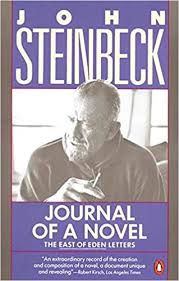
Then there is the fascinating practice of documenting not only one’s life, but the progress of a book. Two books by John Steinbeck that fundamentally changed the way I look at myself as a writer and a human include Journal of a Novel: The East of Eden Letters and Working Days: The Journals of The Grapes of Wrath. Reading these helped me understand how keeping a journal alongside writing a novel can serve several purposes.

One use for a journal is a place to cleanse the palate, so to speak, before turning to the blank page of the work in progress. Reading snippets about Steinbeck’s faithfully recorded personal life reinforced my feelings on using a journal as a “dumping ground” to clear a writer’s head prior to working on a current project. All too often personal issues can make their way into our creative work and many times that isn’t the appropriate venue for hashing out our problems.

Steinbeck wrote a page or two each morning about his life, thoughts, and sometimes current events in order to “warm-up his writing arm.” He also used the journal pages to organize his thoughts about what to write. For example, one day’s journal describes his plans for writing:

May 9, Wednesday: It is time I think for the book to pause for discussion. It has not done that for a long time. I think that is the way I will do it. That way-first a kind of possible analysis and then quick narrative right to the end, explain it first and then do it. (79)

Steinbeck is just one example of a writer who uses journal writing to stay focused on the creative project at hand. Sue Grafton, prolific mystery author (“A” Is for Alibi) believes that the writing process is a constant back and forth between the right and left-brain hemispheres. She keeps a daily log of her writing progress and says:

This notebook (usually four times longer than the novel itself) is like a letter to myself, detailing every idea that occurs to me as I proceed. Some ideas I incorporate, some I modify, many I discard. The journal is a record of my imagination at work, from the first spark of inspiration to the final manuscript. (Raab 9)

Similar to Steinbeck, Grafton starts each writing day with logging the date into her journal followed by what’s going on in her life then a note about ideas she has for the book she’s writing. She ‘talks to herself’ about where the story could go and explores the writer’s question “What if?” In the privacy and safety of a “for my eyes only” journal, Grafton claims that this collection of meandering thoughts helps her jumpstart the creative juices and before she knows it, she’s writing new pages (Raab 11).

The many joys of keeping a journal for writers is a lengthy list. These three writers demonstrate how valuable a tool this is for brainstorming, whining, organizing, formalizing, clarifying, reflecting, and much more.

Upcoming Online Workshop: Writer Wellness

I hope you’ll join me in June for an online workshop hosted by the Yosemite Romance Writers where I’ll spend the month covering and sharing information and activities related to journaling, exercise, nutrition, relaxation, and creative play. The workshop is open to members and nonmembers.

All good things,

Joy

Women with clean houses do not have finished books. ~JEH

Raab, Diana M., ed. Writers and Their Notebooks. The University of South Carolina Press, 2010.

Steinbeck, John. Journal of A Novel: The East of Eden Letters. Penguin Books, 1969.


Revisiting Radway for a Renewing Perspective on the Future of Romance Fiction

READING THE ROMANCE BOOK COVER JANICE RADWAY_51XX-EHPDSL._SX331_BO1,204,203,200_

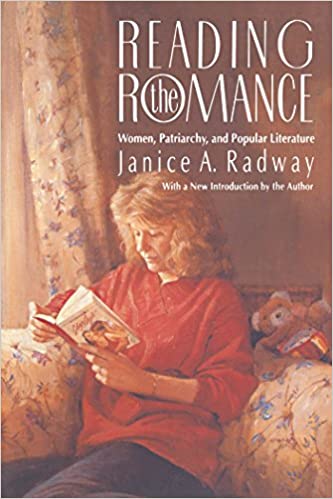
Writing in The Cambridge Companion to Popular Fiction, Fred Botting’s piece “Bestselling Fiction: Machinery, Economy, Excess” reminds me that there are two sides to a coin, and I understand that an individual can realistically only see one physical side at a time. When Botting invokes Janis A. Radway’s assertion that women read romantic fiction because of “…an underlying dissatisfaction” (164), I remember that the Radway study is one good source for understanding not only an academic perspective on the topic of why women read romance but for some of the history of my favorite genre.

Revisiting my copy of Reading the Romance: Women, Patriarchy, and Popular Literature by Radway, I was rewarded with a refreshing look at a historical perspective on the popularity of romantic fiction through the lens of how the publishing industry developed in America. Radway provides a thorough yet succinct review of books as a commercial commodity leading me, the reader, from the first printing press at Cambridge (America) in 1639 to how newspapers created a national hunger for serialized stories to the explosion of gothic romance novels in the early 1970s and how that set the stage for the contemporary world of publishing and reading romance.

What Radway reemphasized for me was the cold, hard truth that publishing is a business whose goal is to trade a relative product for the consumer’s money on a repetitive, reliable, and consistent basis. And that the romance novel industry led the way with particular publishers (i.e., Avon, Harlequin, etc.) intentionally seeking out emotionally stimulating content and consciously creating then delivering a targeted advertising campaign to a particular customer base: women. This foundational market took the bait, so to speak, beginning in the 1960s and have been the bedrock of the romance novel buying population ever since.

Radway’s chapter “The Institutional Matrix: Publishing Romantic Fiction” on the history of paperback publishing juxtaposed with the rise of romance reading actually allowed me to understand what Botting expressed in Cambridge Companion Chapter 9 about bestsellers and how the pulp novel industry led to the current state of affairs in popular genre fiction publishing.

Simply put, Radway’s history of publishing chapter (written several years before Botting in Cambridge Companion) culminates with claims that American women did and do devour large numbers of romance novels in order to repeat a specific type of reading experience, but that it isn’t sufficient to say that this is the only explanation for the popularity of the genre and the historically high sales. She makes it clear to me when she states, “The romance’s popularity must be tied closely to these important historical changes in the book publishing industry as a whole” (45).

Whether this ‘reading romance repetition habit’ is due to “an underlying dissatisfaction” with women’s position in the patriarchy as Radway and others propose, there is no definitive conclusion for me to glean except to say that the reading experience can’t be discounted and nor can the direct relationship to the industry at large.

In my opinion, the Cambridge Companion writers echo Radway. Botting ends with external forces-alteration, novelty, and desire-contributing to the production of bestsellers. Another contributor to CC, Erin Smith, wraps up her thoughts in a similar fashion by indicating that production, marketing, and consumption are king. Radway reiterates her accounting of romance novels as a point of consumerism by, what I see as a precursor of Botting and Smith, by claiming, “Commodities like mass-produced literary texts are selected, purchased, constructed, and used by real people with previously existing needs, desires, intentions, and interpretive strategies” (221).

They all agree that bestsellerism is mostly about marketing to consumer desire.

It’s evident to me from these three perspectives that the business of publishing is an important side of the coin. As a genre writer, I must keep a keen eye on it, but that I must also approach my work as marketable merchandise that will slake the buyer’s thirst but will also create a craving (dare I say addiction?) in the reader to return to take sip after sip after sip.

I believe my soon-to-be-released historical romance novel has the potential to quench readers’ thirst for unique historical settings and because I have two characters whose stories I plan to expand on for sequels, the possibility exists for repeat buyers. I’ve done a considerable amount of specific research on the American frontier in the late 1700s, but not everything I learned appears in the first book of the series. I have research and plot ideas in reserve to write at least two more books set in the same time period.

Considering that Radway and Botting point out as imperative the importance of marketing a novel to create long term reader relationships, the challenge for me will be finding historical events and or commemorations to “hook” my stories on to show a publisher that there is valid potential for interest in my themes and stories today and in the future.

All good things,

Joy

Works Cited

Botting, Fred. “Bestselling Fiction: Machinery, Economy, Excess.” The Cambridge Companion to Popular Literature, edited by David Glover and Scott McCracken, Cambridge University Press, 2012, pp. 159-174.

Radway, Janice A. Reading the Romance: Women, Patriarchy, and Popular Literature. Chapel Hill, NC: The University of North Carolina Press, 1991.