READING GROUP GUIDE FOR THE MERMAID RIOT

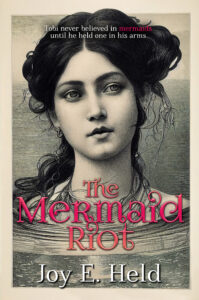
The Mermaid Riot

Joy E. Held

Reading Group Discussion Guide

Book Club Conversation Starters

Saturday 2 May 2026

  1. Tobi and Serena were the best of friends and everyone expected them to become more than friends until a disagreement between their families happened over who was responsible for the death of Tobi’s father who worked for Serena’s father in the phosphate mine. As you read about the accident, do you think it was right of Mrs. Doyle to blame Mr. Robinson or was it an unavoidable situation? Mining accidents and deaths still occur all over the world wherever this type of work is necessitated such as the extraction of diamonds and coal. There are laws in some countries protecting these workers. Do you think mine owners should provide safety to their employees? Can you find a news article about a recent mining disaster and compare it to what happened in the Robinson Phosphate Mine?


  1. Why do you think Tobi had to find out for himself if Dr. Trask had captured a mermaid? Was it peer pressure? Did he believe the Root Seller Woman? If so, why? Was there some other reason that Tobi did something so out of character at least from Serena’s perspective?


  1. The phosphate industry helped bring Charleston, South Carolina back from the brink of financial ruin after The Civil War, but it was eventually supplanted by the discovery of the “stinking stones” in Florida. Today, both states have permanently damaged ecological disaster areas that the Environmental Protection Agency of the United States calls “legacy pollution” sites that are in constant reclamation. The water and soil are contaminated with lead and arsenic which were byproducts of mining phosphate rocks and preparing it for use in fertilizer production. Multiple acres of land are uninhabitable perhaps forever. Keeping in mind the era of Reconstruction following the war, do you think the results of the mining were worth it? Here is an article from The South Carolina Department of Environmental Services that you may want to read Historic Superphosphate Fertilizer Industry in S.C.


  1. One of the major themes of The Mermaid Riot is the warning “don’t believe everything you’re told.” Can you point out any of the ways or scenes where Tobi and Serena experience this adage? Have you ever had a situation where this idea played a role? What happened? What did you learn?


  1. Do you have any questions about the characters in the story?


  1. Looking ahead, do you have any ideas about how Serena and Tobi’s life will change after The Mermaid Riot?


Thank you for reading The Mermaid Riot! Please be on the lookout for Book 2, Revenge of the Mermaid where Serena comes face-to-face with the mermaids and strives to solve their concerns while keeping her family intact! Coming 2026 from Headline Books, Inc.

Joy E. Held

Joyeheld.com


My WriteDay Subscription Box for Writers


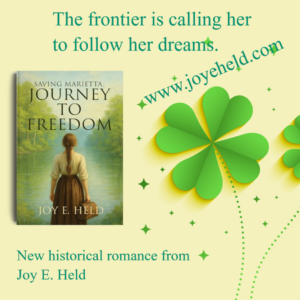
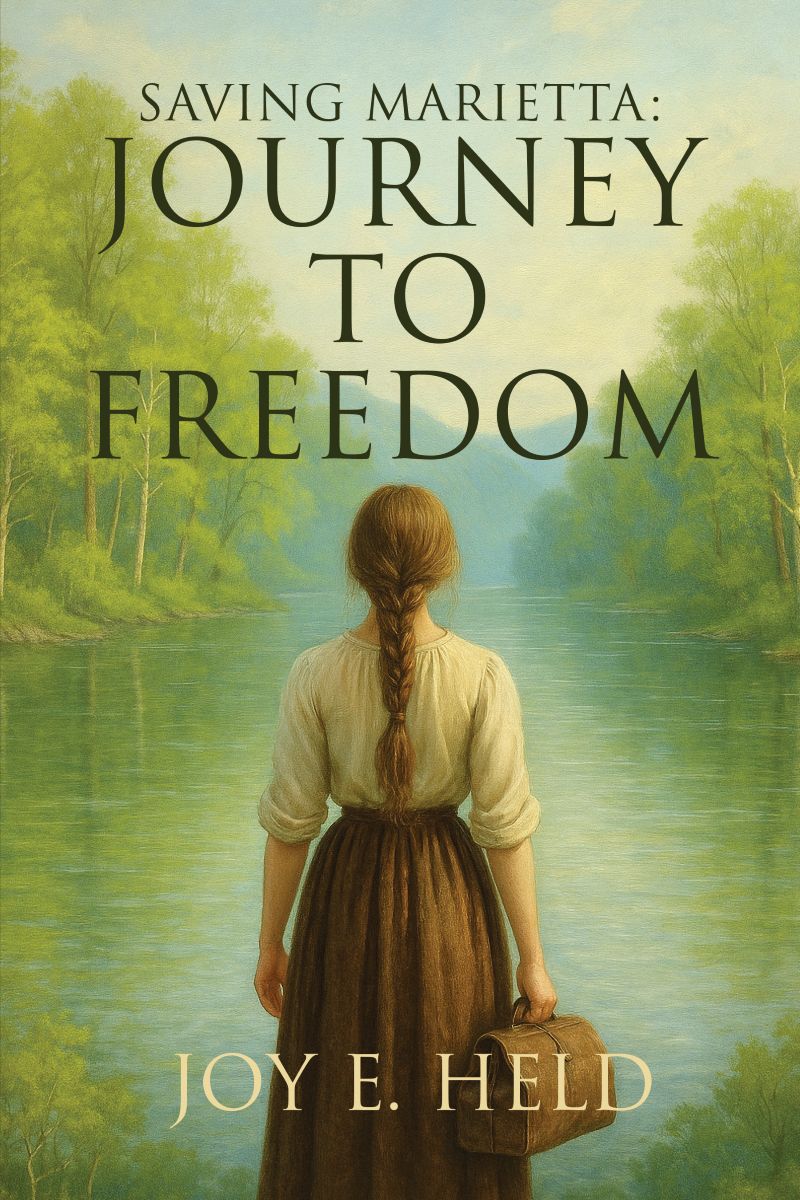
Excerpt Saving Marietta: Journey to Freedom Book 1

AVAILABLE NOW FROM HEADLINE BOOKS, INC.

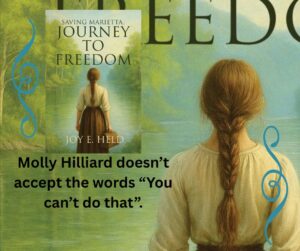
When Molly Hilliard is kicked out of physician training in Baltimore in 1796, she travels to join her family in The Northwest Territory in search of the freedom to become more than an herbal healer and dreams of saving pioneers from illness and disease until she literally loses everything in the icy waters of the Ohio River when her canoe overturns. Molly discovers that her medical school sponsor, Dr. Andrew West, has followed and caught up with her in Pittsburgh, and she must trust strangers to help her evade the meddling man who is hell-bent on marrying her.


Romney Applewood survived ten years as a captive among the Delaware natives when The Greeneville Treaty between the U. S. and the Indian Nations frees all white captives, and he is finally able to search for his younger sister who has been living with another tribe. Just as he is about to take her to a doctor in Boston to help Sarah Jane talk again, she is kidnapped. Suddenly he is back on the frontier searching for his sister despite there being a bounty on his head for “aiding and abetting the enemy”.


Molly and Romney’s destiny is sealed when they bond over saving others from drowning, bullet wounds, and smallpox, but he doesn’t want Molly’s dreams to be shattered by his past and thinks the best thing is to leave her in Marietta to forge a future as a doctor. His brain says go, but his heart shouts never let her go!


Saving Marietta: Journey to Freedom, Book 1

Joy E. Held

$19.99

ISBN 9781958914922

AVAILABLE FROM HEADLINE BOOKS, INC.


EXCERPT:

May 1785

Western Kentucky frontier


Daylight splayed its yellow-orange fingers at the edge of the western Kentucky horizon as the Applewoods stepped out of the cabin. Joseph carried an axe, a saw, and a musket. A powder horn hung from his belt. His wife Nancy followed, rake and hoe in hand. A linen cloth was tied around her waist in such a way as to hold the day’s seeds. She stopped and turned to the open cabin door where her children stood sleepy-eyed and watching.

“Remember to wash out the breakfast bowls, Romney, and you two keep to the yard where we can see you,” she said.

Her son nodded and yawned as his little sister Sarah Jane shadowed him in the doorway. Framed by the stacks of crude-cut logs and mud, Nancy could hardly see them as everything in sight was about the same color. Drab brown and dirty gray. Everything but for the beautiful sunrise. This was the only moment of the day she ever really enjoyed out here among the tall trees and endless fields of grass.

After the birth of their daughter, the freedom, opportunity, and wildness called to her husband. The Virginia Commonwealth’s taxes and crowded townships compelled him to uproot the family and move west. Nancy left behind her rewarding business of fashioning clothing for fine ladies, but she didn’t stop sewing. She made clothes for her family, linens for the house, and a doll for her baby girl, Sarah Jane.

Any time Nancy complained about the loneliness, her husband reminded her that it had been only a few months. “Have patience,” Joseph told her nightly as they lay on the straw mattress on the floor. Maybe after the crops took hold and supplies had built up she’d feel better about being in this isolation called Kentucky. Although there were bright blue skies, lush green forests, and waving grasslands as far as the eye could see, it was barren of people. Nancy had loved having friends and neighbors close to home in Virginia. People to talk to, the market to visit, and the business she had built as a seamstress fed her soul and made her content.

There was no one here except her family for miles and miles, and that’s why Joseph Applewood liked it. He didn’t need people as much as she did. Not only was she lonely, but she also worried every second of every day and night. Worried about where their next meal would come from. Worried about the cold and the damp. Worried about their health. And she worried constantly about Indians.

***

Eleven-year-old Romney was accustomed to his parents working in the field daily. He was big enough to help with the farm work, but he watched Sarah Jane and did the house chores instead. She toddled along behind him while he refilled the water in the cabin and collected kindling.

At midday, the family usually sat together on tree stumps near the edge of the garden and shared biscuits. Today, however, his parents didn’t stop trenching and seeding because the morning glow had succumbed to a mass of gray clouds. They needed the rain, but they also needed to get the seed in the ground. Joseph and Nancy worked through supper hoping to accomplish the whole day’s planting before the heavens opened up.

After chores, the children played their favorite game. Romney pretended to chase Sarah Jane around the base of a giant maple tree whose wide roots spread out from the tree like bark-covered tentacles. It was part of the game to leapfrog over the gnarly roots, and four-year-old Sarah Jane was always ready for a nap after this activity.

When Romney playfully snatched her doll and ran around the tree, Sarah Jane did an awkward about-face and started after him. Her chubby, baby girl legs stumbled. She fell and wailed, as children will do. Her cries pierced the air, and Nancy Applewood’s head jerked up from planting seeds. She straightened her back and squinted her eyes, not at the children, but at a figure lurking near the cabin at the edge of the dense forest.

“Indians!”

As soon as he heard his mother scream, Romney grabbed Sarah Jane and ran for the cabin. An arrow swished through the air next to him, and he turned in time to see his father in the field swinging up his musket. The arrow landed in the center of Joseph’s chest, and he fell on top of the newly plowed rows without getting a shot off. Nancy Applewood hurried toward her children, skirts clutched high and her head down low.

Just as Romney was about to cross the threshold, an Indian grabbed him and his sister. His stomach lurched as his nose and mouth were covered by a large, grimy hand that smelled like dirt and sweat. A second warrior snatched Sarah Jane out of his arms.

“No!” his mother screamed, reaching for her babies. The red man holding his sister shoved Nancy onto her backside. Romney looked to the field where one of the raiders straddled his father’s body and sawed Joseph’s scalp from his head. Nancy scrambled to her feet and dove for Sarah Jane. His mother was clubbed on the side of the head by the blunt end of a tomahawk. She lay motionless on the ground, a stream of red wiggling away from her battered skull. Foul tasting bile rose in Romney’s throat as he and Sarah Jane were dragged toward the forest. The boy struggled in his captor’s arms as fear engulfed his brain.

At the edge of the woods, they stopped and a red man forcibly twisted Romney’s head around to watch the looting and burning of his family’s cabin. He tried to turn away from the carnage, but the Indian grabbed Romney’s hair and forced him to watch as his whole world disappeared in the fire and smoke. At the sight of his mother, eyes wide open and head spilling blood, tears streamed down his cheeks and anger seethed in his young heart. Romney briefly wondered what it felt like to die. Surely, they were going to kill him and his sister next.

But that didn’t happen. They ran through the woods for over an hour, then stopped and set up a crude camp. They tied the children together with a rope around their ankles. Sarah Jane buried her face in Romney’s belly, and he wrapped a protective arm around her. Someone brought them water in a hollowed-out gourd. He helped Sarah Jane drink, then he drank the rest. They promptly fell asleep on the ground as night ate up the forest.

Early the next morning, Romney woke with a start as something jabbed his ribs. Sarah Jane wasn’t beside him. He saw her sitting on a horse in front of an Indian who was leaving camp. He jumped up to follow, but the rope around his ankle pulled him down. He was tied to a tree. The red men laughed.

“Bring her back,” Romney shouted. “Sarah Jane!” His sister turned and looked at him from around the body of her captor, fear showing in her beautiful, sky-blue eyes.

“Where’s her doll?” Romney demanded. An Indian pointed toward those leaving. At least she had her doll. At least she had a small measure of comfort in the doll her mother had made for her.

When the riders disappeared from view, Romney waited, his hands twitching to punch something. With Sarah Jane gone, he figured they would kill him. Instead, they untied him, gave him a little food and water, then helped him up onto his father’s horse that had been taken during the raid. He and the seven Delaware Indians who had burned his home and killed his parents rode through the forest in the opposite direction of the warriors who took Sarah Jane. He would learn later that she had been taken by the Shawnee. He fought back tears by silently vowing to do whatever necessary to find his sister and avenge the murders of his parents. Knowing he would have to stay alive in order to fulfill such a pledge.


Joy E. Held is an author, educator, book coach, and yoga teacher living in West Virginia with her family. She enjoys herb gardening, junk journaling, and walking. She is a member of The Authors Guild and The Society of Children’s Book Writers & Illustrators. Joyeheld.com

Saving Marietta: Journey to Freedom, Book 1

RELEASE DAY FEBRUARY 24!

When Molly Hilliard is kicked out of physician training in Baltimore in 1796, she travels to join her family in The Northwest Territory in search of the freedom to become more than an herbal healer and dreams of saving pioneers from illness and disease until she literally loses everything in the icy waters of the Ohio River when her canoe overturns. Molly discovers that her medical school sponsor, Dr. Andrew West, has followed and caught up with her in Pittsburgh, and she must trust strangers to help her evade the meddling man who is hell-bent on marrying her.


Romney Applewood survived ten years as a captive among the Delaware natives when The Greeneville Treaty between the U. S. and the Indian Nations frees all white captives, and he is finally able to search for his younger sister who has been living with another tribe. Just as he is about to take her to a doctor in Boston to help Sarah Jane talk again, she is kidnapped. Suddenly he is back on the frontier searching for his sister despite there being a bounty on his head for “aiding and abetting the enemy”.


Molly and Romney’s destiny is sealed when they bond over saving others from drowning, bullet wounds, and smallpox, but he doesn’t want Molly’s dreams to be shattered by his past and thinks the best thing is to leave her in Marietta to forge a future as a doctor. His brain says go, but his heart shouts never let her go!


Saving Marietta: Journey to Freedom, Book 1

Joy E. Held

$19.99

ISBN 9781958914922


Joy E. Held is an author, educator, book coach, and yoga teacher living in West Virginia with her family. She enjoys herb gardening, junk journaling, and walking. She is a member of The Authors Guild and The Society of Children’s Book Writers & Illustrators. Joyeheld.com

AM I A WORKAHOLIC?

AM I A WORKAHOLIC?

18 February 2026

AM I A WORKAHOLIC?

Disclaimer: This article may contain affiliate links although I have never made a single dime from one, I’m required by law to provide a disclaimer.

If I am a workaholic, I don’t care.

Honestly, I’m pretty sure I am a workaholic, but I’m not going to blame anyone else. Growing up, I had intense role models. My parents and extended family members were all middle class and had to work incredibly hard to make ends meet, food appear on the table, and apparel that met the fashion expectations of the day available to everyone. If we were poor, I didn’t get the memo, but I also don’t remember wanting too much besides a book to read, the time and freedom to read it, and paper and pencil with which to write my own poems and stories.

When I was twelve years old, my parents, who were self-employed (my Dad actually worked two jobs year-round; one full-time and one part-time, both as a contractor,) decided I should be more conscious of the money necessary to run a business and a household. I was happy to learn and by the age of fourteen I was keeping the financial books for both of them. As the family bookkeeper for two entrepreneurs, did I maybe see too much work going on? Did I assume everybody worked all the time? I don’t remember thinking that, but perhaps it influenced me more than I knew, because flash forward I will work, work, work until something is done or I run myself into the ground and get sick.

Something called the Bergen Work Addiction Scale entered the world around 2012. It was compiled by researchers in Norway and the United Kingdom and administered to over 12,000 working Norwegians. It’s based on the traditional psychological conditions indicating addiction to anything and is developed in specific accordance with the principles of work. Here are the seven basic criteria of the Bergen scale:

  • You think of how you can free up more time to work.
  • You spend much more time working than initially intended.
  • You work in order to reduce feelings of guilt, anxiety, helplessness and depression.
  • You have been told by others to cut down on work without listening to them.
  • You become stressed if you are prohibited from working.
  • You deprioritise hobbies, leisure activities, and exercise because of your work.
  • You work so much that it has negatively influenced your health.

How many do you recognize in yourself? I meet six of the seven. Whatever.

To save me from myself, my Mom introduced me to yoga when I was eighteen. She probably recognized the type A (for Always busy) oldest child syndrome leaking out. Because I was a competitive gymnast, hatha yoga suited my twisty-twirly, boneless body just fine. Consequently, I have practiced yoga and meditate to counterbalance my worker bee personality ever since.

And although not much is said about it, the dirty little secret of gymnastics AND ballet is that you can’t do that stuff forever. THAT has haunted me forever. The last day of ballet, the last day of back handsprings, and the last night of reading till dawn were difficult for me.

The last day of storytelling will inevitably make its appearance. That will be a really tough one. Eyes, hands, shoulders, spine, and hips will eventually stop cooperating. My pragmatic side gets this. My creative side says, “Get this shit done before you can’t!” So, I read books, write books, sell books, and help others with their book needs while I can and until I can’t.

That’s why I am a workaholic. One day the work won’t work.

Are you a workaholic? I took this test on the Psychology Today website and scored a B-. Well, damn. I would love to know what you score. Remember to take such things with a healthy, side-eye of skepticism.

https://www.psychologytoday.com/us/tests/career/workaholic-test

Leave a comment below. And sign up for my newsletter below.

Be well, write well!

Joy E. Held

Founder and CEO

My WriteDay Subscription Box

Connect with us:

Website: https://www.mywriteday.com

Facebook: https://www.facebook.com/profile.php?id=61550745717735

Instagram: https://www.instagram.com/mywriteday/

Email: MyWriteDaySubBox@gmail.com


My WriteDay Subscription Box

One of my many projects is My WriteDay bi-monthly subscription box for writers, and it opens to new subscribers Monday, March 2 at noon eastern. Each box is packed with a new writing craft book, office essentials, healthy snacks, and items to support a writer’s creativity and health. The March-April 2026 box is “Picture Book Perfection.”


Advertisement

Would you like to see your book advertised here? Just $20. Contact me at writerwellness@gmail.com


I’ve got a new book coming out February 24!

Saving Marietta: Journey to Freedom, Book 1


JOY E. HELD is a busy author, educator, editor, book coach, entrepreneur, and literary citizen responsible for this site and its contents. She is the author of

Writer Wellness: A Writer’s Path to Health and Creativity (Headline Books, Inc., 2020)

Writer Wellness Workbook: A Guided Workbook and Journal to Accompany Writer Wellness: A Writer’s Path to Health and Creativity (Headline Books, Inc., 2023)

The Mermaid Riot (Fire and Ice YA, 2024) Young Adult Historical Fantasy

Saving Marietta: Journey to Freedom, Book 1 (Headline Books, Inc., 2026) Adult Historical Romance

She is the winner of multiple writing and book awards:

West Virginia Writers, Inc. Annual Writing Contest, Honorable Mention, Novel, 1998.

New York Book Festival, Honorable Mention, Writer Wellness, 2020.

Next Generation Indie Book Awards, Finalist, Writer Wellness, 2021.

Northeast Ohio Romance Writers of America, Member of the Year, 2020.

Northeast Ohio Romance Writers of America, First Book Award, 2020.

She is an adjunct faculty member in the Southern New Hampshire University Online MFA Creative Writing.

She is a proud graduate of Seton Hill University in Greensburg, PA with an MFA in Writing Popular Fiction.

She is a member of The Authors Guild and the Society of Children’s Book Writers and Illustrators.

Joy is the founder and CEO of My WRITEDAY Subscription Box for writers and readers.

Buy me a coffee


BOOKS BY MY FRIENDS

28 September 2025

Welcome to Books By My Friends!

Today we are featuring:

  • JANE BUEHLER
  • JOY E. HELD
  • JAN THORNTON JONES
  • BARBARA JEAN MILLER

This article may contain affiliate links which may result in the author receiving a commission when readers purchase items through the links. You are receiving this message because you previously signed up for notifications or participated in a program/course with Joy. You may unsubscribe at any time. My ideas are not ever meant as a substitute for consulting with a qualified health professional.


JANE BUEHLER

BOOK The Fire Apprentice: A Fairy Tale with Benefits

AUTHOR Jane Buehler

GENRE Cozy romantasy

BLURB He’s the blacksmith. But she’s the one playing with fire.

After a fairy seduced her, fathered her child, and tried to take that child, Jane swore she’d never trust one again. Surely she can find a suitable human man to be a companion for herself and a father for little Elle, right? So when her housemate mentions a new apprentice blacksmith, Jane leaves Elle playing in the yard and heads to the smithy.

Rowan is rugged and handsome but clearly not interested. Disappointed, Jane has just left the smithy when a sudden shadow swoops over the village. Jane races home to see a dragon snatching Elle. Jane is distraught. Then Rowan mysteriously appears and offers to rescue the child. He insists the dragon won’t hurt Elle—apparently fairy children apprentice with dragons to learn fire magic. How does Rowan know so much about fairies? Turns out, he is one.

Jane will do anything to rescue Elle, even if it involves the F word—a fairy. But climbing into the mountains with Rowan is risky. His reticence keeps Jane guessing, but she can’t keep her mind off him: he’s even more handsome out in the moonlit woods, with that deep voice and those capable hands. When Jane and Rowan run into trouble, Jane must take charge. Because it turns out, Rowan needs rescuing too.

The Fire Apprentice is a grumpy/sunshine romance—or maybe more of a brooding/effusive romance—that’s perfect for fans of Throne in the Dark or Jenna Wolfhart’s Falling for Fables cozy romantasy series. Each book in the Sylvania series can be read on its own but might contain spoilers for previous books. The Fire Apprentice contains love scenes and a heroine with pelvic floor pain.

ABOUT THE AUTHOR Emily Jane Buehler published two nonfiction books—one on the science and craft of baking bread, the other a memoir of a bicycle trip from New Jersey to Oregon—before venturing into fiction. She currently writes cozy fantasy romances where everyday people (and fairies) have adventures and fall in love. They are lighthearted stories with action and adventure, love and magic, where protagonists learn to believe in themselves and find their courage. And yes, they are kissing books!

Emily Jane  believes that by portraying positive relationships with good communication, romance novels can help readers envision such relationships for themselves, serve as a model of proper consent for young people, and portray diverse types of relationships and people. They can be a fun escape while still having depth and contributing to a better society.

Emily Jane lives in North Carolina. Her favorite things include letters sent through the mail, her fair-trade wool leg warmers, and chocolate cake with frosting. She is passionate about living waste free and usually has one or more cats.

AUTHOR’S WEBSITE https://janebuehler.com/


JOY E. HELD

BOOK The Mermaid Riot

AUTHOR Joy E. Held

GENRE Young Adult Historical Romantasy

BLURB When Serena Robinson and Tobi Doyle witness the neighborhood apothecary lifting a limp body from his fishing boat, they don’t realize they will be swept up into a life-or-death race to save a mermaid from the doctor’s greedy plans.

ABOUT THE AUTHOR Joy E. Held is an award-winning author, editor, book coach, educator, and yoga instructor living with her husband in West Virginia.

AUTHOR WEBSITE https://www.joyeheld.com


JOY E. HELD

BOOK Writer Wellness Workbook

AUTHOR Joy E. Held

GENRE Self-help, creativity, writing

BLURB Writer Wellness Workbook is a companion book to Writer Wellness: A Writer’s Path to Health and Creativity designed to offer hands-on practice in the five key concepts of journaling, fitness, relaxation, nutrition, and creative play.

ABOUT THE AUTHOR Joy E. Held is an award-winning author, editor, book coach, educator, and yoga instructor living with her husband in West Virginia.

AUTHOR WEBSITE https://www.joyeheld.com


JAN THORNTON JONES

BOOK Autumn Is Calling

AUTHOR Jan Thornton Jones

GENRE Early childhood fiction

BLURB It is a crisp fall day in Appalachia and Katie is learning about the season of fall as she and her mother walked to the local autumn festival. She sees squirrels and other animals putting away food for the cold winter months and compares it to the canning of fruits and vegetables that she and her mother did the day before. at the autumn festival, she experiences Appalachian music while admiring the beautiful fall mums and pumpkins. Katie sees and learns about many other traditional Appalachian customs, like making apple butter, quilting, folk, toys, and pumpkin patches. The colorful illustrations make this a book for the entire family as they go with Katie on an autumn adventure!

ABOUT THE AUTHOR I am a former early childhood teacher who is now the author of six books for children.

AUTHOR WEBSITE https://www.Janjonesbooks.com


BARBARA JEAN MILLER

BOOK Last Ditch

AUTHOR Barbara Jean Miller

GENRE Regency romance

BLURB Ellie Waltham and her mother have been driven from their home by her grasping cousin. As they run out of resources, her young niece and nephew appear, needing care. But their uncle Gareth Delaney magically moves all of them to safety and returns to Belgium to search for the children’s wounded father and their mother.

Once all are safe in England, Ellie’s scheming relative tries to steal their land. Though she thinks she lacks courage, Ellie takes action to protect her family. Abducted in an effort to force her to wed the villain, she knows she will be killed so he can claim what she has inherited. While sure Gareth is riding to save her, Ellie must still rescue herself…and him.

ABOUT THE AUTHOR Barbara Jean Miller is an author, educator, and nature observer.

AUTHOR’S WEBSITE https://www.barbarajeanmiller.substack.com


Advertisement


My WriteDay Subscription Box

My WriteDay is a bi-monthly subscription box for writers and readers. Each “treasure trove for writers” includes a writing craft book and 3-5 writerly gifts curated to support writers.


Buy me a coffee

JOY E. HELD is an author, educator, editor, book coach, entrepreneur, and literary citizen responsible for this site and its contents. She is the author of

Writer Wellness: A Writer’s Path to Health and Creativity (Headline Books, Inc., 2020)

Writer Wellness Workbook: A Guided Workbook and Journal to Accompany Writer Wellness: A Writer’s Path to Health and Creativity (Headline Books, Inc., 2023)

The Mermaid Riot (Fire and Ice YA, 2024) Young Adult Historical Fantasy

She writes spicy historical fiction under a pen name.

She is the winner of multiple writing and book awards:

West Virginia Writers, Inc. Annual Writing Contest, Honorable Mention, Novel, 1998.

New York Book Festival, Honorable Mention, Writer Wellness, 2020.

Next Generation Indie Book Awards, Finalist, Writer Wellness, 2021.

Northeast Ohio Romance Writers of America, Member of the Year, 2020.

Northeast Ohio Romance Writers of America, First Book Award, 2020.

She is an adjunct faculty member in the Southern New Hampshire University Online MFA Creative Writing.

She is a proud graduate of Seton Hill University in Greensburg, PA with an MFA in Writing Popular Fiction.

She is a member of The Authors Guild and the Society of Children’s Book Writers and Illustrators.

Joy is the founder and CEO of My WRITEDAY Subscription Box for writers and readers.


Online workshop in September

REFLECTIVE WRITING: A JOURNAL WORKSHOP FOR WRITERS

Looking forward to leading this month-long, self-paced online workshop for Hearts Through History Romance Writers. We’ll discover different styles of journaling and how published authors have relied on reflective writing to support their careers and so can you! Starts Sept. 6. Join us!

Go here to register.

Writer Wellness: A Writer’s Path to Health and Creativity https://headlinebooks.com/product/writer-wellness-a-writers-path-to-health-and-creativity/

Revisiting Radway for a Renewing Perspective on the Future of Romance Fiction

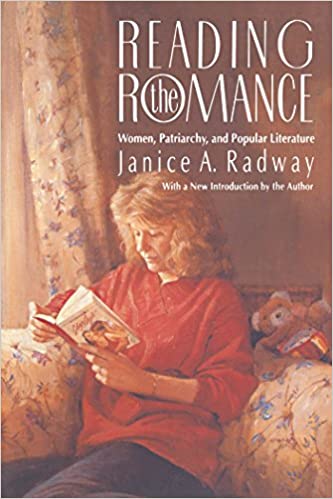
READING THE ROMANCE BOOK COVER JANICE RADWAY_51XX-EHPDSL._SX331_BO1,204,203,200_

Writing in The Cambridge Companion to Popular Fiction, Fred Botting’s piece “Bestselling Fiction: Machinery, Economy, Excess” reminds me that there are two sides to a coin, and I understand that an individual can realistically only see one physical side at a time. When Botting invokes Janis A. Radway’s assertion that women read romantic fiction because of “…an underlying dissatisfaction” (164), I remember that the Radway study is one good source for understanding not only an academic perspective on the topic of why women read romance but for some of the history of my favorite genre.

Revisiting my copy of Reading the Romance: Women, Patriarchy, and Popular Literature by Radway, I was rewarded with a refreshing look at a historical perspective on the popularity of romantic fiction through the lens of how the publishing industry developed in America. Radway provides a thorough yet succinct review of books as a commercial commodity leading me, the reader, from the first printing press at Cambridge (America) in 1639 to how newspapers created a national hunger for serialized stories to the explosion of gothic romance novels in the early 1970s and how that set the stage for the contemporary world of publishing and reading romance.

What Radway reemphasized for me was the cold, hard truth that publishing is a business whose goal is to trade a relative product for the consumer’s money on a repetitive, reliable, and consistent basis. And that the romance novel industry led the way with particular publishers (i.e., Avon, Harlequin, etc.) intentionally seeking out emotionally stimulating content and consciously creating then delivering a targeted advertising campaign to a particular customer base: women. This foundational market took the bait, so to speak, beginning in the 1960s and have been the bedrock of the romance novel buying population ever since.

Radway’s chapter “The Institutional Matrix: Publishing Romantic Fiction” on the history of paperback publishing juxtaposed with the rise of romance reading actually allowed me to understand what Botting expressed in Cambridge Companion Chapter 9 about bestsellers and how the pulp novel industry led to the current state of affairs in popular genre fiction publishing.

Simply put, Radway’s history of publishing chapter (written several years before Botting in Cambridge Companion) culminates with claims that American women did and do devour large numbers of romance novels in order to repeat a specific type of reading experience, but that it isn’t sufficient to say that this is the only explanation for the popularity of the genre and the historically high sales. She makes it clear to me when she states, “The romance’s popularity must be tied closely to these important historical changes in the book publishing industry as a whole” (45).

Whether this ‘reading romance repetition habit’ is due to “an underlying dissatisfaction” with women’s position in the patriarchy as Radway and others propose, there is no definitive conclusion for me to glean except to say that the reading experience can’t be discounted and nor can the direct relationship to the industry at large.

In my opinion, the Cambridge Companion writers echo Radway. Botting ends with external forces-alteration, novelty, and desire-contributing to the production of bestsellers. Another contributor to CC, Erin Smith, wraps up her thoughts in a similar fashion by indicating that production, marketing, and consumption are king. Radway reiterates her accounting of romance novels as a point of consumerism by, what I see as a precursor of Botting and Smith, by claiming, “Commodities like mass-produced literary texts are selected, purchased, constructed, and used by real people with previously existing needs, desires, intentions, and interpretive strategies” (221).

They all agree that bestsellerism is mostly about marketing to consumer desire.

It’s evident to me from these three perspectives that the business of publishing is an important side of the coin. As a genre writer, I must keep a keen eye on it, but that I must also approach my work as marketable merchandise that will slake the buyer’s thirst but will also create a craving (dare I say addiction?) in the reader to return to take sip after sip after sip.

I believe my soon-to-be-released historical romance novel has the potential to quench readers’ thirst for unique historical settings and because I have two characters whose stories I plan to expand on for sequels, the possibility exists for repeat buyers. I’ve done a considerable amount of specific research on the American frontier in the late 1700s, but not everything I learned appears in the first book of the series. I have research and plot ideas in reserve to write at least two more books set in the same time period.

Considering that Radway and Botting point out as imperative the importance of marketing a novel to create long term reader relationships, the challenge for me will be finding historical events and or commemorations to “hook” my stories on to show a publisher that there is valid potential for interest in my themes and stories today and in the future.

All good things,

Joy

Works Cited

Botting, Fred. “Bestselling Fiction: Machinery, Economy, Excess.” The Cambridge Companion to Popular Literature, edited by David Glover and Scott McCracken, Cambridge University Press, 2012, pp. 159-174.

Radway, Janice A. Reading the Romance: Women, Patriarchy, and Popular Literature. Chapel Hill, NC: The University of North Carolina Press, 1991.

“What is middlebrow?”

On the airplane coming home from a humanities conference recently, the woman sitting next to me was reading Written in My Own Heart’s Blood (2016) by Diana Gabaldon. Intermittently, she put down the novel and picked up the knitting in her lap. Her progress told me that she was making a baby sweater.

Gray hair, traveling alone, reading an 1152-page historical novel, and knitting represents one end of the spectrum of readers who enjoy historical romance. The other end of the spectrum stated in a 2013 SquareSpace study of romance fiction statistics maintains: minimum age 30, college-educated, minimum income $55,000/year (Static).

I asked my seatmate if she’d read Gabaldon’s other books in the series.

“Every one of them,” she replied emphatically.

I remarked on the average page count of a Gabaldon work to which she answered, “I’ve read a couple of them twice.”

Before deplaning, I wanted to know why.

“Jamie.”

Not the historical accuracy, not the cable television series, and not being part of a community, but the draw of the character. Just when I thought surveys and social media were gospel when it comes to understanding readership, I bump into Nana.

I stopped to think, not only about my potential readership but the impression of my beta hero, whose quiet nature may make him appear too passive to survive frontier life, let alone the prejudice and ostracism guaranteed for him following ten years as a captive of the Delaware Indian tribe during the American Revolution.

Would this woman on the plane, obviously intellectually, physically, emotionally, and financially capable of appreciating historical romance fiction, be attracted to my hero?

More important (well, maybe) to this conversation is how high or not is her brow?

The literary term ‘middlebrow’ rubs me the wrong way. Reminds me of a relative’s unibrow curse. I’m familiar with the condescending attitude the terminology implies as also noted by author Nicola Humble in “The reader of popular fiction”:

“The concept of the middlebrow is a notoriously vexed one. ‘Middlebrow’ has always been a dirty word. Since it’s coinage in the late 1920s [there’s some discrepancy about this date] it has been applied, almost always disparagingly, to the sort of cultural products thought to be too easy, insular and smug” (Cambridge 92).

Briefly, ‘highbrow’ and ‘lowbrow’ are outgrowths of the questionable science phrenology presented in 1796 by German physician Franz Joseph Gall. He claimed that bumps on the head were directly related to “organs” in the brain that he associated with a range of functions such as someone’s propensity to love or tell secrets.

This pseudoscience was short-lived by the 1840’s across Europe and America. Those that will bastardize picked up on phrenology and claimed that having a high forehead indicated intelligence and a short forehead pointed to less mental capacities. I was unable to find anything pointing directly to Gall proposing these stereotypes. I’m not defending the concept, but the father of phrenology didn’t intentionally mean for it to be used as a class, racial, or intellectual divisor (Manual of Phrenology 83). But it has been and obviously continues.

Do I think the baby boomer grandmother would appreciate my historical romance? I do. There is a 2013 survey by author M.K. Tod that supports this here. P.S. Note in the report where baby boomers say they primarily learn about new books.

All good things,

j

JoyHeldHeadshot3

Humble, Nicola. “The Reader of Popular Fiction.” The Cambridge Companion to Popular Fiction. Ed. David Glover and Scott McCracken. New York: Cambridge University Press, 2012. 86-102.

Manual of phrenology : being an analytical summary of the system of Doctor Gall, on the faculties of man and the functions of the brain : translated from the 4th French ed. Philadelphia : Carey, Lea & Blanchard, 1835.

“Romance Fiction Statistics.” Static1, SquareSpace, 24 Jan. 2019, http://writerwellness.files.wordpress.com/2020/03/4059e-romancestats.pdf

“10 Facts on Boomer Readers.” Inside Historical Fiction, 24 Jan. 2019, https://awriterofhistory.com/2015/11/09/10-facts-on-boomer-readers/


“Write what you know”

CURSIVE INK kelly-sikkema-399338

I read, write, and study historical romance. My most recent completed manuscript is 470 pages long and currently designated as “historical fiction with romantic elements.” The distinction is because the couple in the story doesn’t meet (meet-cute) by page five of the novel. This is kind of a burr under the saddle for me because I believe that historical romance readers, no matter how experienced, want and appreciate the world-building and character motivations at the start of a book regardless of how long it takes for the two main characters to eventually collide.

However, the contemporary industry standard of the heroine and hero appearing within the first five pages is applied across the sub-genre board. So, I’m presently stuck with the label of “historical fiction with romantic elements” because a lot has to happen to Molly, Romney, and America before they find each other and start their journey together. I hope that makes sense. At first, I was dismayed by the nomenclature, but I’ve embraced it now because it’s not that big of a deal…until I go agent and publisher shopping. Since I don’t have time to pursue that part of the process yet, I’ve decided not to angst over it. Spoiler alert: Molly and Romney end up together.

Typewriter045

The book is my response to “write what you know” and to fill a void in historical romance offerings. Frontier America, specifically the Northwest Territory, was a rough era and not viewed by some publishers and readers as romantic enough to be a popular setting or time period. I live and work in the belly of this particular beast, aka The Mid-Ohio Valley, and the research is literally at my fingertips. My house is near the Ohio River where my characters almost drown. I work on the campus of a local college whose library has one of the most extensive Special Collections of pioneer history in the country. There are actual pioneer cabins preserved and on display in a local museum that I drive by every day on the way to work.

However convenient, it hasn’t been easy, but I don’t read, write, and study historical romance because it’s easy. I do it because I’m fascinated with the human project. I’m in total awe of women who cooked without an electric stove or wiped up spills without paper towels or any number of other modern civilities we live by today that were non-existent in early America.

They must have been really strong-willed people driven by something that helped them survive seriously difficult situations so that you and I can be doing this amazing thing (having a meeting of the minds via technology) right now. I think the “something” that propelled and motivated them was love, and I respect the hell out of the men and women who paved the way for me in spite of the mistakes they made. I read, write, and study historical romance out of respect for the past, curiosity about humanity, and the love of words. Most of all, I want to believe that love conquers all. So, don’t burst my bubble, okay?

I’ve gone overboard with telling you a “little” about my project. Now, you understand why my manuscript is so long.

I’m more concerned about the condition of the publishing industry lately than the length of my manuscript. We live in the “United States of Amazon,” and it’s their prowess and whims that have me wondering constantly how to really connect with readers. Publishing is the EASY part thanks to Amazon (and others) literally giving birth and providing respectability to the self-publishing concept, but I worry about getting the message out to pull readers into my books. More on this later.

All good things,

j

JoyHeldHeadshot3