BOOKS BY MY FRIENDS

28 September 2025

Welcome to Books By My Friends!

Today we are featuring:

  • JANE BUEHLER
  • JOY E. HELD
  • JAN THORNTON JONES
  • BARBARA JEAN MILLER

This article may contain affiliate links which may result in the author receiving a commission when readers purchase items through the links. You are receiving this message because you previously signed up for notifications or participated in a program/course with Joy. You may unsubscribe at any time. My ideas are not ever meant as a substitute for consulting with a qualified health professional.


JANE BUEHLER

BOOK The Fire Apprentice: A Fairy Tale with Benefits

AUTHOR Jane Buehler

GENRE Cozy romantasy

BLURB He’s the blacksmith. But she’s the one playing with fire.

After a fairy seduced her, fathered her child, and tried to take that child, Jane swore she’d never trust one again. Surely she can find a suitable human man to be a companion for herself and a father for little Elle, right? So when her housemate mentions a new apprentice blacksmith, Jane leaves Elle playing in the yard and heads to the smithy.

Rowan is rugged and handsome but clearly not interested. Disappointed, Jane has just left the smithy when a sudden shadow swoops over the village. Jane races home to see a dragon snatching Elle. Jane is distraught. Then Rowan mysteriously appears and offers to rescue the child. He insists the dragon won’t hurt Elle—apparently fairy children apprentice with dragons to learn fire magic. How does Rowan know so much about fairies? Turns out, he is one.

Jane will do anything to rescue Elle, even if it involves the F word—a fairy. But climbing into the mountains with Rowan is risky. His reticence keeps Jane guessing, but she can’t keep her mind off him: he’s even more handsome out in the moonlit woods, with that deep voice and those capable hands. When Jane and Rowan run into trouble, Jane must take charge. Because it turns out, Rowan needs rescuing too.

The Fire Apprentice is a grumpy/sunshine romance—or maybe more of a brooding/effusive romance—that’s perfect for fans of Throne in the Dark or Jenna Wolfhart’s Falling for Fables cozy romantasy series. Each book in the Sylvania series can be read on its own but might contain spoilers for previous books. The Fire Apprentice contains love scenes and a heroine with pelvic floor pain.

ABOUT THE AUTHOR Emily Jane Buehler published two nonfiction books—one on the science and craft of baking bread, the other a memoir of a bicycle trip from New Jersey to Oregon—before venturing into fiction. She currently writes cozy fantasy romances where everyday people (and fairies) have adventures and fall in love. They are lighthearted stories with action and adventure, love and magic, where protagonists learn to believe in themselves and find their courage. And yes, they are kissing books!

Emily Jane  believes that by portraying positive relationships with good communication, romance novels can help readers envision such relationships for themselves, serve as a model of proper consent for young people, and portray diverse types of relationships and people. They can be a fun escape while still having depth and contributing to a better society.

Emily Jane lives in North Carolina. Her favorite things include letters sent through the mail, her fair-trade wool leg warmers, and chocolate cake with frosting. She is passionate about living waste free and usually has one or more cats.

AUTHOR’S WEBSITE https://janebuehler.com/


JOY E. HELD

BOOK The Mermaid Riot

AUTHOR Joy E. Held

GENRE Young Adult Historical Romantasy

BLURB When Serena Robinson and Tobi Doyle witness the neighborhood apothecary lifting a limp body from his fishing boat, they don’t realize they will be swept up into a life-or-death race to save a mermaid from the doctor’s greedy plans.

ABOUT THE AUTHOR Joy E. Held is an award-winning author, editor, book coach, educator, and yoga instructor living with her husband in West Virginia.

AUTHOR WEBSITE https://www.joyeheld.com


JOY E. HELD

BOOK Writer Wellness Workbook

AUTHOR Joy E. Held

GENRE Self-help, creativity, writing

BLURB Writer Wellness Workbook is a companion book to Writer Wellness: A Writer’s Path to Health and Creativity designed to offer hands-on practice in the five key concepts of journaling, fitness, relaxation, nutrition, and creative play.

ABOUT THE AUTHOR Joy E. Held is an award-winning author, editor, book coach, educator, and yoga instructor living with her husband in West Virginia.

AUTHOR WEBSITE https://www.joyeheld.com


JAN THORNTON JONES

BOOK Autumn Is Calling

AUTHOR Jan Thornton Jones

GENRE Early childhood fiction

BLURB It is a crisp fall day in Appalachia and Katie is learning about the season of fall as she and her mother walked to the local autumn festival. She sees squirrels and other animals putting away food for the cold winter months and compares it to the canning of fruits and vegetables that she and her mother did the day before. at the autumn festival, she experiences Appalachian music while admiring the beautiful fall mums and pumpkins. Katie sees and learns about many other traditional Appalachian customs, like making apple butter, quilting, folk, toys, and pumpkin patches. The colorful illustrations make this a book for the entire family as they go with Katie on an autumn adventure!

ABOUT THE AUTHOR I am a former early childhood teacher who is now the author of six books for children.

AUTHOR WEBSITE https://www.Janjonesbooks.com


BARBARA JEAN MILLER

BOOK Last Ditch

AUTHOR Barbara Jean Miller

GENRE Regency romance

BLURB Ellie Waltham and her mother have been driven from their home by her grasping cousin. As they run out of resources, her young niece and nephew appear, needing care. But their uncle Gareth Delaney magically moves all of them to safety and returns to Belgium to search for the children’s wounded father and their mother.

Once all are safe in England, Ellie’s scheming relative tries to steal their land. Though she thinks she lacks courage, Ellie takes action to protect her family. Abducted in an effort to force her to wed the villain, she knows she will be killed so he can claim what she has inherited. While sure Gareth is riding to save her, Ellie must still rescue herself…and him.

ABOUT THE AUTHOR Barbara Jean Miller is an author, educator, and nature observer.

AUTHOR’S WEBSITE https://www.barbarajeanmiller.substack.com


Advertisement


My WriteDay Subscription Box

My WriteDay is a bi-monthly subscription box for writers and readers. Each “treasure trove for writers” includes a writing craft book and 3-5 writerly gifts curated to support writers.


Buy me a coffee

JOY E. HELD is an author, educator, editor, book coach, entrepreneur, and literary citizen responsible for this site and its contents. She is the author of

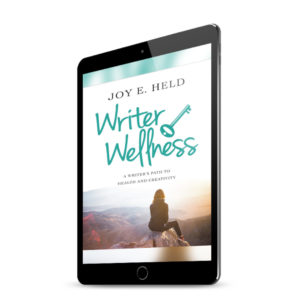
Writer Wellness: A Writer’s Path to Health and Creativity (Headline Books, Inc., 2020)

Writer Wellness Workbook: A Guided Workbook and Journal to Accompany Writer Wellness: A Writer’s Path to Health and Creativity (Headline Books, Inc., 2023)

The Mermaid Riot (Fire and Ice YA, 2024) Young Adult Historical Fantasy

She writes spicy historical fiction under a pen name.

She is the winner of multiple writing and book awards:

West Virginia Writers, Inc. Annual Writing Contest, Honorable Mention, Novel, 1998.

New York Book Festival, Honorable Mention, Writer Wellness, 2020.

Next Generation Indie Book Awards, Finalist, Writer Wellness, 2021.

Northeast Ohio Romance Writers of America, Member of the Year, 2020.

Northeast Ohio Romance Writers of America, First Book Award, 2020.

She is an adjunct faculty member in the Southern New Hampshire University Online MFA Creative Writing.

She is a proud graduate of Seton Hill University in Greensburg, PA with an MFA in Writing Popular Fiction.

She is a member of The Authors Guild and the Society of Children’s Book Writers and Illustrators.

Joy is the founder and CEO of My WRITEDAY Subscription Box for writers and readers.


GUEST POST: THE IMPORTANCE OF BACKSTORY TO WRITING

22 September 2025

“The Importance of Backstory to Writing”

Guest Post from Author PETE TAYLOR

Some trail names are given to hikers by their fellow hikers. Trail names generally reflect a personal aspect of a hiker such as hair color, appearance, profession, and a myriad of other aspects of a person.

We always laugh about a guy we met with a trail name of “Ass Trumpet.” At one of the first town-stops along the trail he overdid the salad and fruit bar one night and for the rest of his time on the trail he was called “Ass Trumpet” after keeping his fellow hikers up all night with his ‘explosions.’

A trail name sticks with you. It sometimes pops up years after the end of a hike. For example, I was in a small outfitters shop in Luray, Virginia looking for a specific piece of hiking gear for my son’s Christmas present. A guy tapped me on the shoulder and asked, “Hardcharger”?

I turned and sure enough it was “Red Dawn,” a young man I had hiked with back in Tennessee many years before. To this day I doubt if either of us remembers their real name, but we recognized each other and chatted for a while catching up on our hiking experiences. In another incident, in a shelter in Connecticut, I ran into a young woman who told us her trail name. I had seen that name in a trail log in one of the shelters in Virginia. She was a member of a group of young women who referred to themselves as the “Pack Divas.” I asked her what had happened to her group, and we had a wonderful time talking around the campfire.

Hiking serves as the backstory, the backbone so to speak, using the hike as an extension to support the central theme of my books Province Senior Intelligence Advisor and The Tuscarora Trail, part of my four-book series set during the Vietnam War. This backstory also serves as a metaphor for facing the challenges of life, overcoming obstacles, and learning to move on from adversity.

Besides the retelling of my Vietnam experiences, I added nuance to the events by relying on my own trail journals that I’ve kept for all of my hikes. Each night I’d sit and jot down notes about the day. When I got home, I’d get out maps and expand on the works by recording the daily mileages, proper geographical names, names of people and places we had encountered, and include photos that I had taken. I’d type them up into a web file and store them away.

Hardcharger & Johnny B on the Appalachian Trail

“Johnny B” and I have been hiking together for thirty years, and we’ve lived a number of adventures. My journals from those hikes make for great ‘backstory’ for my books.

The ‘backstory’ gave me a great opportunity to have a ‘vehicle’ to tell the various war stories as if I am talking to an audience rather than just relating the stories in machinegun fashion. In the final book of the series, The Tuscarora Trail, I was able to use the hiking backstory to finish the series as well as to weave a degree of closure into the stories. My intent was to have a ‘backstory’ that people could relate to.

So how does a writer convey those feelings; fear, loneliness, frustration, quick-learning, and still tell the story? Part of the ‘success’ is the backstory. Be it the Appalachian or Tuscarora Trails, or an innocent romance, backstory is important to my writing. It provides an additional vehicle to tell other parts of the events and to develop or maintain interest in the major theme of my books. The story-in-the-story is helpful because the ‘hero’ can show additional character dimensions that wouldn’t necessarily be observable in the standard telling of the tale; love in wartime, coming-of-age, adventurous hikes, feelings of grief and loss, and a myriad of other emotions that can be explored by the reader and the author alike all through backstory.

Have a good one,

~Pete

AUTHOR BIO PETE TAYLOR

Peter Taylor is an American author and Military Historian who served three combat tours in Vietnam 1969-1971 and 1972-1973. His works include a Civil War History of Harrison County, West Virginia, a novel that developed from that book The Most Hated Man in Clarksburg, and The Advisor Series, four novels about the military Advisory efforts in Vietnam.

*Thanks for your wisdom and your service, Pete. ~JEH


DISCLAIMER

This article may contain affiliate links which may result in the author receiving a commission when readers purchase items through the links.

You are receiving this message because you previously signed up for notifications or participated in a program/course with Joy. You may unsubscribe at any time.


Leave a comment below.


ADVERTISEMENT


Buy me a coffee


PERKS FOR WRITERS WHO JOURNAL


PERKS FOR WRITERS WHO JOURNAL

Wednesday, 4 May 2025

Journaling and writers share a long and important history. From the personal journals of Gustave Flaubert that read like a laundry list of how to view life to the Story Bibles many writers create to keep themselves organized throughout the writing process, writers have always had and always will have numerous reasons to keep a journal. A journal can serve writers of all genres in many different ways, chief among them as a place to collect and hash out story ideas.

It isn’t a waste of valuable writing time to scribble in a journal in advance of working on one’s novel. In the words of author James Brown:

What matters is how journaling can help the writer come up with ideas, kind of a warm-up to a bigger process. The next step is building on those ideas, discarding some and fleshing out others, developing characters and motives, and arranging the scenes in a logical, meaningful sequence with a firm sense of a beginning, middle, and end. Whether you write your thoughts down in a journal or try to store them all in your head, which I don’t recommend, story begins when you begin to dream and brainstorm about people and their problems. (Raab 6)


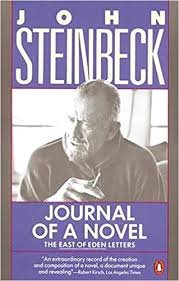
Then there is the fascinating practice of documenting not only one’s life, but the progress of a book. Two books by John Steinbeck that fundamentally changed the way I look at myself as a writer and a human include Journal of a Novel: The East of Eden Letters and Working Days: The Journals of The Grapes of Wrath. Reading these helped me understand how keeping a journal alongside writing a novel can serve several purposes.

One use for a journal is a place to cleanse the palate, so to speak, before turning to the blank page of the work in progress. Reading snippets about Steinbeck’s faithfully recorded personal life reinforced my feelings on using a journal as a “dumping ground” to clear a writer’s head prior to working on a current project. All too often personal issues can make their way into our creative work and many times that isn’t the appropriate venue for hashing out our problems.

Steinbeck wrote a page or two each morning about his life, thoughts, and sometimes current events in order to “warm-up his writing arm.” He also used the journal pages to organize his thoughts about what to write. For example, one day’s journal describes his plans for writing:

May 9, Wednesday: It is time I think for the book to pause for discussion. It has not done that for a long time. I think that is the way I will do it. That way-first a kind of possible analysis and then quick narrative right to the end, explain it first and then do it. (79)

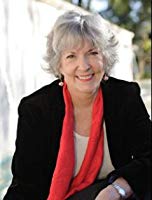
Steinbeck is just one example of a writer who uses journal writing to stay focused on the creative project at hand. Sue Grafton, prolific mystery author (“A” Is for Alibi) believes that the writing process is a constant back and forth between the right and left-brain hemispheres. She keeps a daily log of her writing progress and says:

This notebook (usually four times longer than the novel itself) is like a letter to myself, detailing every idea that occurs to me as I proceed. Some ideas I incorporate, some I modify, many I discard. The journal is a record of my imagination at work, from the first spark of inspiration to the final manuscript. (Raab 9)

Similar to Steinbeck, Grafton starts each writing day with logging the date into her journal followed by what’s going on in her life then a note about ideas she has for the book she’s writing. She ‘talks to herself’ about where the story could go and explores the writer’s question “What if?” In the privacy and safety of a “for my eyes only” journal, Grafton claims that this collection of meandering thoughts helps her jumpstart the creative juices and before she knows it, she’s writing new pages (Raab 11).

Sue Grafton

What about the time that journal writing “steals” away from the time you could be writing your novel? Expanding on what James Brown says above about “building on those ideas, discarding some and fleshing out others,” your journal is where you can learn about how a character develops in a novel because you have charted your own growth through journaling. Of course, the people in your novels are encapsulated versions, but as novelist and educator Katherine Tucker says of her journals, “I am convinced, though, that the writing of the pages taught me more than I will ever realize, that my years as a journal writer were essential to the work I am doing now, and to the work still to come” (Raab 42).

Journal writing satisfies so many needs of the writer, particularly the fiction author, by acting as a sort of playground for the practice of writing stories. Examining one’s own life is a direct conduit to having a rich, fruitful resource upon which to draw from when it comes time to create the villain, the sweetheart, the teacher, the heroine, the whatever because we have a written record of experience with that character in the pages of our journals. Journaling for writers is a safe place to practice, to record, to play “what if,” to examine, to describe, to report, to praise, to condemn, to lie, to tell the truth, to plan, and discover. The pages of a writer’s journal can serve as a handy resource when describing the realities in novels that entice readers to suspend their lives in favor of riding along with your characters.

The Massive List of Perks & Ideas to Journal About

Keeping a journal doesn’t have any requirements for time spent. In fact, writers can receive a massive number of advantages from regular or spontaneous journaling.

Journaling practice helps writers:

Acknowledge

Blog

Celebrate

Data collection

Develop voice

Documentation of process

Experiment, try new things out away from critical eyes

First drafts

Freedom from the inner critic

Freedom to think

Generate ideas

Healthy self-talk

Improve writing skills

Jumpstart thinking

Knowledge storage

Learn to pay attention

Mental and emotional cleansing

Motivational

Nurture and spark creativity

“Organize a chaotic life” V. Woolf

Organize thinking

Overcome writer’s block

“Parking spot for ideas or problems” D. Raab

Place to scribble

Place to doodle

Plan writing for the day

Quiet the inner critic

Re-examination place

Record activities/daily life/travel/conferences

Record keeping

Record observations on life/people/work/emotions

Safe place to vent/be stupid/self-indulgent

See things from another perspective

Self-knowledge

Self-empowering

Self-development

Solidify thoughts

Story/poem/article ideas

“The author’s other brain” D. Raab

Travel record

Understand

Validate purpose and direction

Write without boundaries

Word collection

Work out problems

X-ray examination, deep look

Yearnings clarified

Zone in on solutions


Can you think of anything to add?


How to Make Use of the Perks in Your Writing

At one time or another, I’ve used all of these perks from my journals in my professional life. As a college writing instructor, I found out quickly how important it is to document the who/what/when/where of things that happened in class. Teaching in higher education is quite a challenge these days, and it paid many times over to have kept a journal of what I planned to teach in class, what actually occurred in the class, and student behaviors (attendance, participation, etc.) After 14 years of tracking my English composition classes, I wrote a short story about an incident on a college campus in which I created my characters, descriptions, settings, plot entirely from my notes as a college educator.

I’ve also noticed my writing voice in nonfiction and fiction develop from how I “write to myself” in my journals. I experiment with form, shape, sentence structure, word choice, punctuation, and ideas in my journal and have seen those trials appear in my blogging and my fiction.

Art hasn’t ever been one of my strong points, but I’ve always had the urge to doodle and draw. My journals allow me to play around with forms and designs that then get transferred to my professional work. I was introduced to art journaling several years ago and loved the process of combining words with art. I took my love of scrapbooking and put it together with stories or journal entries and found a surprising amount of “artistic satisfaction.” When my nonfiction book Writer Wellness: A Writer’s Path to Health and Creativity was released in its second edition in 2011, I added a chapter about how to incorporate art journaling techniques to a regular journaling habit.

I keep a word journal filled with words I like the sound of, want to know the meaning of, or plan to use in a novel. When I read anything from the cereal box to fiction, I write a word or two in my word journal and refer to it when I want something fresh or appropriate for my writing.

If you’re already a fan or regular practitioner of journaling, you will understand when journal therapy teacher Kathleen Adams says,

There’s a friend at the end of your pen which you can use to help you solve personal or business problems, get to know all the different parts of yourself, explore your creativity, heal your relationships, develop your intuition…and much more.


The possibilities are endless as long as I continue to collect my thoughts, ideas, and random musings in a journal.

The many joys of keeping a journal for writers is a lengthy list. The three writers highlighted here (Steinbeck, Grafton, and Brown) demonstrate how valuable a tool this is for brainstorming, whining, organizing, formalizing, clarifying, reflecting, and much more.

Writer or not, do you journal?

Be well, write well!

~Joy

Connect with me on social media. The links are in the top right corner of this site. Sign up for my newsletter to keep up date.

Works Cited

Raab, Diana M., ed. Writers and the Notebooks. The University of South Carolina Press, 2010.

Steinbeck, John. Journal of a Novel: The East of Eden Letters. Penguin Books, 1990.


Advertisements

Perfect Strangers by Barbara Jean Miller

My WriteDay subscription box for writers mywriteday.com. Subscriptions open for new subscribers on June 30!

My WRITEDAY is a subscription box program that delivers curated products from authors, creators, and small businesses to writers and readers in the continental U.S. It’s unique in that many products are sourced from writers who are also crafters and artisans. Each box delivers a writing craft book and 3-7 items associated with the key concepts (journaling, fitness, relaxation, nutrition, and/or creative play) of Writer Wellness, my flagship program and book (Headline Books, Inc. 2020.)

Each box is inspired by literary themes, genres, and holidays. Every box includes access to My WRITEDAY Digital Magazine filled with writing and publishing tips, writer wellness ideas, fiction excerpts, poetry, special offers, social media options such as live virtual meetings, and more.

The idea behind My WRITEDAY is to help writers spend more time creating stories, engaging with like-minded book friends, and enjoying the juicy, creative life they deserve. From craft books to office supplies to fun, writing/reading inspired décor, subscribers ages 14 and up will discover an experience designed to offer a healthy plan for living their best writing life. The cost per box is $59.00 and includes free shipping (in the continental U.S.). There are discounts available on the website. Please visit us!


Writer Wellness EBOOK


Disclaimers

This article may contain affiliate links which may result in the author receiving a commission when readers purchase items through the links.

You are receiving this message because you previously signed up for notifications or participated in a program/course with Joy. You may unsubscribe at any time.

My ideas are not ever meant as a substitute for consulting with a qualified health professional.


Buy me a coffee


“EUSTRESS TOOL KIT” TO HELP YOU RELAX

RELAXATION FOR WRITERS

25 April 2025

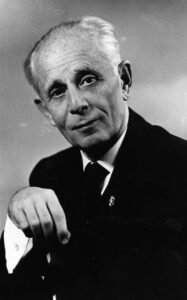
Hans Selye

A researcher named Hans Selye began ground-breaking studies in the 1930’s on stress. Since then, we’ve been educated on the detrimental effects of stress on our mind-body-spirit system. Stress is bad has and is the message, but Selye was among the first to define eustress or conditions that are productive and healthy for the body. Distress=negative situations. Eustress=positive impacts. Like the feeling of euphoria, eustress represents life events such as achieving a goal, going on vacation, getting a good evaluation, or doing something you enjoy. Stress is unavoidable and always has been. From the first time a saber-toothed tiger chased a primitive hunter out of the forest, stress has and will continue to be a part of the life and development of humankind. And writers. I could end it here by saying, “Just deal with it,” but that wouldn’t be helpful. What I am going to suggest is reframing your relationship with (di)stress to achieve a balanced acceptance of it in your life and work as a writer.

TIME CANNOT BE MANAGED

One of the biggest lessons I have learned from 50 years of practicing yoga and meditation is that time cannot be managed. It can only be accepted. Not changed, reversed, challenged, or revisited. Time is in control, and it is life altering to accept that and not constantly be at war with it. I learned this from the simple practice of counting my breaths and noticing how Time became not the enemy or friend but my steady companion. Time is the constant. We are not. Even though Time is a man-made concept, I believe that it is the source of much of our (di)stress. Reframing my perception of Time as simply a construct rather than a master was very relaxing. This is what I mean by revising your impression of stress to something more positive.

STRESS CANNOT BE MANAGED

Time cannot be managed regardless of how happy your planner or appointment app may be. It will march forward with or without you and not be impressed by whether you keep up or not. So why let it manage YOU? I believe the same about managing stress. It is a fact of life and cannot be “managed” any easier than time can be. Both concepts can be ORGANIZED but not managed. Imagine the faces on my students the first day of the “Stress Management” college course I taught for years when I explained my perspective on time and stress. Neither is manageable but you can rethink your view and achieve understanding, balance, and relief by accepting this and learning to COPE.

“EUSTRESS TOOL KIT”

1.The first step is acknowledging your place in the hierarchy of stress and time. You are not in control but that doesn’t mean you can’t play well with them.

2.The second step is creating a list of what you already know helps you relax. From the simple to the complicated and the mundane, making a list of what you find relaxing provides you with a tool kit for accepting what you can’t change and believing that life will be okay. This is your “Eustress Tool Kit.”

3.Third step is practicing the actions on your personal relaxation list on a daily basis. At least one relaxing activity per day will help you achieve balance and develop the understanding that you can handle almost anything because you know that stressful situations happen and that you have a set of tools to help you cope.

My “Eustress Tool Kit” list includes:

Walking

Yoga

Counting breaths

Gardening

Meditation

Reading

Water

Journaling

Butterflies

A day without appointments

Purple things

Colored markers

Helping people

Learning something new

The sound of my grandson’s voice

Blank paper

Not burning what I’m cooking or baking

Laughing

Thinking

Sharing

What’s in your “Eustress Tool Kit” that you can pull out once or twice a day to cope with stress instead of fighting with it?

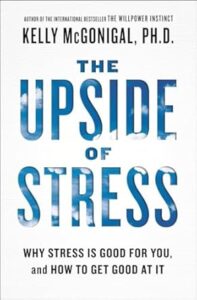
If you want to look deeper at this idea, I highly recommend reading The Upside of Stress, Why Stress is Good for You, and How to Get Good at It by Kelly McGonigal (Penguin Random House, 2015).

Up Next: Eat Right to Write Right


Sign up for my weekly e-newsletter by filling out the form below. Thanks in advance!


Be well, write well.

~Joy

This article may contain affiliate links which may result in the author receiving a commission when readers purchase items through the links.


MY WRITEDAY SUBSCRIPTION BOX CART OPENS MONDAY, MAY 5. Don’t miss out on this fun box of writerly goodness lovingly called by one subscriber “A treasure trove for writers.” The May/June box is called “My Writing Coach.”


Buy me a coffee


Who is your writing champion?

Wednesday, September 29, 2021

From the Joy desk

Hi, sweet reader!

This is our moment. Yours and mine. And as my fifth-grade teacher, Mrs. Mary Young, was very fond of repeating, “You can’t get this moment back, so don’t waste it.”

Many years later, I think about Mrs. Young using this call-to-action to teach eleven-year-olds the value of time. I believed and followed everything Mrs. Young said. She was the first teacher to encourage my writing and tell me that I could and should follow the path of a writer. Even though she knew that I was the heir apparent to my mother’s thriving ballet school, (Mrs. Young’s granddaughter took ballet from my mother,) Mrs. Young let me know that I was a writer. She was also the first person to impress the importance and meaning of a deadline. She is why I became a writer, got a journalism degree, and have pursued the craft and publishing for fifty (yep) years.

The point of this vignette is that everyone must have a champion, someone who sees their potential and supports them in every way, even when the going is tough, and the champion falls off the horse. Who is that person for you? Who first voiced, “You can do this” convincingly enough to motivate you to pursue it? This person is due your thanks.

I often thank Mrs. Young in my journal and sometimes I complain to her that being an author isn’t a piece of cake. Those are the moments when I’ve fallen off the horse and am looking up from the dirt searching for someone to blame. That’s when the query letter doesn’t hit the mark. When a reviewer says something less than adoring (they’re allowed, but it still stings.) Simply dumping my frustrations into the journal helps clear away the doubt, and I’m able to remind myself that writing and teaching it is what I do. I get up, dust off my cheeks, get back into the office chair, and start typing or researching or whatever again. It’s what I do.

I write, publish, and teach to reach out, to connect with other people. Thanks to Mrs. Young, I have the belief (not always the confidence because I’m just human) that my words and ideas may help someone else.

This support notion applies to everything, every field, and every person. Who first pointed out that you make a fabulous fill-in-the-blank and drove you to be better at it? Send this wonderful soul an unsent letter of thanks by writing to them in your journal. Unsend the letter. Keep it in your journal, unless you want to send it in some way-message in a bottle, email, snail mail. It’s all good.

All good things,

Joy

Women with clean houses do not have finished books.

If you’d like to receive a free download YOGA FOR WRITERS exercise routine click the link below to sign-up for my newsletter.

https://artisanal-musician-5007.ck.page/016aec7954

https://artisanal-musician-5007.ck.page/016aec7954

Thursday Thot: My Idea Of Hell

DAY SEVEN WITHOUT POWER. THIRD NIGHT IN A HOTEL. I write this from a hotel room for the third night in a row after losing electricity like a million other people in last Friday night’s storm. Some of you have been waiting to hear from me for one reason or another (contracts, proposals, grades!) and I had every intention of getting it all to you until my 114 year-old house was slammed head-on by high winds and rain. I’m still waiting on the power company to restore my electricity, the insurance adjuster to come and tell me what I already know (You have a mess to clean up here,) and the tree removal fellow to spend about six hours to chop, drop, and chip ALOT of trees from my yard. We have fence, roof, gutter, trees, and power damage. A piece of slate roof was hurled downward so fast it’s impaled on the prongs of our antique iron fence. No one was hurt, but we are pretty bothered by it all. And apparently this many trees hitting the ground all at once has unleased a boat-load of pollen. I can hardly breathe or see through my red, itchy eyes.

But I found out in the last six days that what I thought was my idea of hell (no utilities, no cash, no gas in either car, one day of cat food, no ice, very little technology) was more empowering than over whelming. Yeah, I’m exhausted, and I’m pretty tired of playing “pioneer woman” with the candles and oil lamps, but I discovered a resourse I was unaware of. I’m coping and working with what I have instead of grabbing for what I don’t have. It took a couple of days but food, water, and ice trickled in, and while I waited I journaled and journarled and journaled. It obviously has kept me calm and rational and given me a record of what’s been going on.

Everybody is fine. It hasn’t been a picnic by any stretch of the imagination, and many people are dealing with worse than what my husband and I experienced. But I’ll be damned if I don’t own a gi-normous generator by this weekend. Keeping the wine cold was near impossible without any ice.

Be well, write well.

Joyeheld@gmail.com

http://www.joyeheld.com


Thursday Thot: Triumph In Spite It All

Writers wrestle in solitary confinement to create work worthy of distribution to the masses.  We listen to our guts writhe and dare to write down the utterances.  We literally tap into the deepest seams of human components and release the secrets of the spirit in print for everyone to see.  Such creatures would be “pedastalized” in a truly free and creative world.  But we aren’t.

Writers are eccentric.  Writers are different.  You never know where a writer’s mind is even if you are standing in front of her looking into her eyes.  Significant others just get used to it. Even though the whole world relies on some aspect of a writer’s abilities, the writer is sectioned off “to work”, but really to put us where they can keep an eye on us!  Lest we indulge in daydreaming, talking to ourselves, or something worse like the historical bad writer habits of alcohol or drugs. 

Almost everyone knows of Hemingway’s alcohol problems or Poe’s drug abuse.  Why does the world have this negative image of writers?  Because history has a passion for emphasizing the foibles of the greats in an attempt to claim, “He was a great writer in spite of his flaws.” 

Flaws.  Imperfections.  Blemishes.  This is the stuff that makes us individuals, that makes us lovable, that gives writers a different perspective on the world.  A writer’s vantage point is precisely where her voice emanates.  What makes a writer is someone who notices that their voice and their turn of mind come from the same immeasurable place.  When I wrote my first short story in grade school from the outlook of two shoes talking to each other in a dark shoe box, I heard my voice for the first time.  Writers can see, feel, think, smell, and hear the worlds of other people and objects.  It’s what we do.

“I’m a writer.  I use everything,” said Truman Capote.  To truly be a writer, regardless of genre, you must ‘muse’ everything in your world and in your mind to the advantage of your craft.  It’s a task that comes easier for some writers than others.  It’s a question of listening and being open to what you hear.  How can you evolve into the grand writer you desire to be?  By leading a daily life devoted to expanding your body, mind, and spirit in every sense of the word.  By following the way of Writer Wellness.

The idea of Writer Wellness happened to me because of a hectic schedule and the natural instinct to “use everything” around me to create my writing.  When I was expecting my first baby, I published a magazine article about continuing to run a dance studio while pregnant.  When a guest artist taught classes at our local community theatre, I published an article about his career on Broadway.  When my life got wonderfully full of children, a household, work, and writing deadlines, I organized a system that would allow me to listen to my inner and outer worlds and maintain my writing voice.

Writer Wellness is composed of regular practices of journal writing, exercise, relaxation, nutrition, and creative play.  For example, depending on my schedule, my daily journal entry may be three pages long or just the front of an index card.  Exercise is either walking the dog, yoga practice, cardio equipment, or walking.  I ALWAYS find at least five minutes a day to close my eyes and meditate.  The food I eat is simple and grown as locally as possible.

Writer Wellness evolved from a personal habit to a community program and then into a book.  I follow the principles and guide others to do the same.  It’s a simple, developmental approach that any writer can try in any degree.  The results are tumultuous productivity and long term good health.  And triumph over flaws by using what you know as a writer to make your life and writing better.

How did you triumph over some imperfections to become who you are today?

There are five primary areas of practice to the Writer Wellness plan. Every other week I will post an idea for relaxation (Monday Meditation,) creative play (Tuesday Tickle,) fitness and exercise (Wednesday Workout,) journaling and misc. (Thursday Thought,) and nutrition (Friday Feast.)

Meanwhile, remember to look for a digital or print copy of Writer Wellness, A Writer’s Path to Health and Creativity at Who Dares Wins Publishing, http://whodareswinspublishing.com.

Be well, write well.

Joy E. Held


Thursday Thot: “Words-day” Instead of Thursday

Although I am a fan of Thor, the god of Thunder and big biceps, I am proceeding with my revolt against the common names for the days of the week and renaming today “Words-day”. Good-bye Thursday, at least for the moment. My journaling thot for this “Words-day” is taken from an exercise courtesy of the amazing social media expert Kristen Lamb presented in her BLOGING FOR AUTHOR BRAND online workshop. She presents an interesting quandry for someone just starting out as a blog trekker when she assigns class members to describe themselves in 100 words.

“ASSIGNMENT: Write at least 100 individual words that describe you. If you were a jar of pasta sauce, these would be the ingredients. Memories, favorite bands, favorite movies, favorite songs, foods, etc.” (Kristen Lamb, 2012)

We’re all writers here in some form or another. What’s a hundred words? We can write a hundred words in our sleep and forget the most important parts unless we wake up in the middle of the night and write them down. What’s so difficult about one hundred individual words about ME? Try it. Post it here and let me know how it feels to go that deep.  Happy “Words-day”!

Joy: mom, wife, daughter, sister, aunt, care giver, maid, cook, bottle washer, laundress, driver, gardner, yogini, author, teacher, friend, lover, reader, pizza lover, entrepreneur, book reviewer, nurse, journal fanatic, Internet junkie, executrix, trustee, employee, boss, legal advisor, bill collector, bill payer, postal clerk, tweeter, scorpio, organizer, shopper, bling lover, blogger, email clerk, Pepsi addict, baggy eyed, long haired, big nosed, opinionated, moody, different, stubborn, competitive, football crazy, sports lover, spirit loving, traffic cop, paper grader, hugger, editor, submissions guru, romantic, germ-a-phobe, giving, funny, average, caring, systematic, lazy, insomniac, moon lover, cartwheeler, head stander champ, jewelry hog, black tights freak, neice, grand daughter, cousin, Facebooking, girl.

Show me yours!

Be well, write well.

http://www.joyeheld.com


Wednesday Workout: Renaming Today “Pens-day”

Continuing with this week’s theme of world domination, instead of Wednesday, today is being renamed “Pens-day.” So far, the resistance has been futile. I renamed Monday “Fun-day” and Tuesday was officially changed to “Muse-day” and the response has been pretty ho-hum. That’s okay. Quite revolutions are the longest lasting.

Since this day at Writer Wellness is always about a fitness idea, the word is to get out your pens and write about exercise. Whether you consider yourself a writer or not, almost everyone has something to say about exercise.

“Whenever I feel the urge to exercise, I lie down.” Can’t pinpoint exactly who coined this one (feel free to help me out with proper citation,) but it encapsulates the way many people feel about exercise. They avoid it like the plague. On this momentous “Pens-day” instead of Wednesday, grab a writing implement in your hand (yes, we’ll count that as exercise move number one if you insist,) and write down what you think, feel, and smell about exercise. Simplify things and write a simple pros and cons list. If you like exercising, the pros list will be longer. If you don’t… (Yes, we’ll count the writing as exercise move number two if you insist.) But I insist that you take a good look at your exercise pro and con lists and make the commitment to add exercise to your DAILY list of things to do.


“I hate to exercise. I figure at my age, why bother? If God wanted me to bend over, he’d throw diamonds on the floor!”

                ~Joan Rivers

The image of something valuable in return for the effort of exercise is a great one to keep in mind as you put one foot in front of the other and pound a path on that treadmill until they have to call in a repairman to replace the tread!

Why don’t you post your exercise pros and cons list here today, right now on this first and important “Pens-day?”

There are five primary areas of practice to the Writer Wellness plan. Every other week I will post an idea for relaxation (Monday Meditation,) creative play (Tuesday Tickle,) fitness and exercise (Wednesday Workout,) journaling and misc. (Thursday Thought,) and nutrition (Friday Feast.)

Meanwhile, remember to look for a digital or print copy of Writer Wellness, A Writer’s Path to Health and Creativity at Who Dares Wins Publishing, http://whodareswinspublishing.com.

And check out these great blogs for ideas to keep your writing and publishing healthy and prosperous.

http://writeitforward.wordpress.com/ Bob Mayer

http://jenniholbrooktalty.wordpress.com/ Jenni Holbrook

http://warriorwriters.wordpress.com/ Kristen Lamb

http://inspiration4writers.blogspot.com/ Inspiration for Writers, Inc.

http://pentopublish.blogspot.com/ Natalie Markey

http://amyshojai.com Amy Shojai

Check out my new website Joy E. Held

Have you subscribed to this Writer Wellness blog yet? Get email updates when a new post is added. Click “subscribe” and leave your email. That’s it and thanks in advance!

And hugs to my tweet friends who tweet this forward.

Be well, write well

Tuesday Tickle: Renaming Today “Muse-day”

“Amateurs sit and wait for inspiration, the rest of us just get up and go to work.”

                ~Stephen King, On Writing

Waiting on inspiration? Really? That writer must not need the money or realize how important the process is. It’s just as important as the product when it comes to writing. Lots of us know we have a mysterious “writing muscle”, and true, it needs a kick in the thing we use to hold chairs down with but the process doesn’t require inspiration to be put into gear. The process requires perspiration. And since the advent of the psychological term “writer’s block”, the invention of a muse is popular when it comes to needing the proper impulse to write. What is a muse anyway? Is it the inner critic? Is it a secret font of ideas stored in our subconscious we just have to tap into for stuff to write about? Is it some guy sitting in the basement smoking cigars admiring his bowling trophies (more Stephen King) while we struggle for the stream of words that make us writers? Muse, inspiration, whatever, are all just another word for courage. Are we brave enough to be the writers we dream we are?

What the muse or the inspiration may actually be is the time it takes for our brains to sort through the muck of stimulations we absorb constantly and bring something cohesive to the surface. That’s why English professors have a far off look in their eyes all the time. It explains why novelists spill things. Brain work for writers is the equivalent of an intense cardio workout for not the recommended thirty-minute session with a cool-down afterward, but a continual mind boggling distraction until we figure it out. Then we have something to write. The muse is our minds organizing the clutter of the process until the words fall into place and we can fill the pages with them. There is no inspiration. There is only the process of thinking, connecting, writing drivel, and more thinking until it becomes the answer to the question we have asked with our stories. The muse is the imaginary delivery girl dressed or undressed in the costume of your own mental doing. She (or he or it) gives us somewhere to place the blame while we’re waiting on the brain to tidy up the mess of stuff we’ve fed it. But it’s the writing process that enables the brain to have what it needs. So keep the process going: journal, write ugly grammar, blog, and read, read, read until the muse is inspired enough to bless you with the story.


“Biting my truant pen, beating myself for spite:

‘Fool!’ said my Muse to me, ‘look in thy heart and write.’”

                ~Sir Philip Sidney (1554-1586)

                Astrophel and Stella, Sonnet I

This inspiration-muse thing has been going on for quite a while. But notice the Muse says, “…and write.” She doesn’t say, “Take a seat, honey, and when I get this figured out for you, I’ll call.”

Will you take the process challenge this “Muse-day” and give her something, anything to work with?

There are five primary areas of practice to the Writer Wellness plan. Every other week I will post an idea for relaxation (Monday Meditation,) creative play (Tuesday Tickle,) fitness and exercise (Wednesday Workout,) journaling and misc. (Thursday Thought,) and nutrition (Friday Feast.)

Meanwhile, remember to look for a digital or print copy of Writer Wellness, A Writer’s Path to Health and Creativity at Who Dares Wins Publishing, http://whodareswinspublishing.com.

And check out these great blogs for ideas to keep your writing and publishing healthy and prosperous.

http://writeitforward.wordpress.com/ Bob Mayer

http://jenniholbrooktalty.wordpress.com/ Jenni Holbrook

http://warriorwriters.wordpress.com/ Kristen Lamb

http://inspiration4writers.blogspot.com/ Inspiration for Writers, Inc.

http://pentopublish.blogspot.com/ Natalie Markey

http://amyshojai.com Amy Shojai

Check out my new website Joy E. Held

Have you subscribed to this Writer Wellness blog yet? Get email updates when a new post is added. Click “subscribe” and leave your email. That’s it and thanks in advance!

Be well, write well