BOOKS BY MY FRIENDS

10 November 2025

Welcome to Books By My Friends!

Today we are featuring:

  • DESTINEE BROOKE
  • JANE CARY AND KAAREN CARY FORD
  • MOLLY KENDALL
  • BARBARA JEAN MILLER
  • DAVID MOULD

This article may contain affiliate links which may result in the author receiving a commission when readers purchase items through the links.

You are receiving this message because you previously signed up for notifications or participated in a program/course with Joy. You may unsubscribe at any time.


DESTINEE BROOKE

BOOK: The Girl Who Lived: A True Story of a Resilient Heart

AUTHOR: Destinee Brooke

GENRE: Memoir

BLURB: Destinee was four years old when her mom tried to make her kill herself. The trajectory of her life was forever altered as the emotions associated with that night later became the foundation on which she would build her identity. After living with different families throughout the years, and conforming to fit in, she became desperate to find somewhere to belong and be loved for who she was – baggage and all. She struggled to find reasons to stay alive as the demons of her own past, and the demons which plagued her family for generations, threatened to crush her spirit. This is a story of one girl’s journey to overcome loss, search for love, and find redemption.

ABOUT THE AUTHOR: Destinee Brooke has always used writing as a therapeutic outlet, starting at a young age. She started writing The Girl Who Lived: The Story of a Resilient Heart during a creative writing class her senior year of college after realizing the healing power of writing about her trauma. Since then, she’s graduated with degrees in both English Education and Creative Writing. She’s made it her mission to help others, her students included, work through their trauma and bring awareness of how to overcome generational pain. She lives in West Virginia with her son.


JANE CARY, KAAREN CARY FORD, Editor

BOOK: Tuscawilla: Stories of a Farm

AUTHOR: F. Jane Cary, Kaaren Cary Ford, Editor

GENRE: Memoir; History

BLURB: Tuscawilla: Stories of a Farm is a collection of stories by the late F. Jane Cary about farm life in Greenbrier County, West Virginia, in the middle of the twentieth century. Cary lived her entire life on Tuscawilla Farm, eventually managing it after the deaths of her brothers. This fascinating account of the realities of post-war farm life features P.O.W.s, the ins and outs of hog butchering, how to make the perfect apple butter and much more. Cary’s unique personality and love of the world around her shines through, and takes the reader back to an America that can be hard to recognize.

ABOUT THE AUTHOR: F. Jane Cary (1923-1995) lived her entire life on Tuscawilla Farm, just outside of Lewisburg, West Virginia. She was the second daughter of the farm manager, and after the deaths of her father and two brothers, took on the position herself, managing all aspects of the farm from animal husbandry to gardening to cooking large meals for friends and family. In her youth, Cary had wanted to become a teacher, but ill health prevented her from finishing high school, and instead she instilled her love of West Virginia history and farming by instructing the many young people who worked for her. Well-known and well-liked, she rarely left home, and documented her experiences of the farm on many legal tablets, transcribed and edited by her niece, Kaaren Cary Ford, after her death.


MOLLY KENDALL

BOOK: Saving Ariel

AUTHOR: Molly Kendall

GENRE: New Adult Romance/Mystery

BLURB: Ariel Matthew enjoys escaping into the worlds and adventures of her favorite books, but she can’t escape her past, no matter how hard she tried to push it from her mind. Haunted by a traumatic event, Ariel struggles to find peace from her memories of what happened. When Axel Stone walks into the small coffee shop where she works, her world is changed forever, and she begins to believe that happiness might be possible. But neither one of them is ready for the devastation that ensues when both of their pasts come back with a vengeance.

ABOUT THE AUTHOR: Molly Kendall is quick-witted and quiet, and appreciates a dramatic story when she reads one, as well as crafting such tales of her own. She aims to inspire hope within her readers hearts as she shines light onto darker topics. When she doesn’t have her nose stuck in a book, you can find her at home with her husband, cats and bunnies.

https://authormollyk.com


BARBARA JEAN MILLER

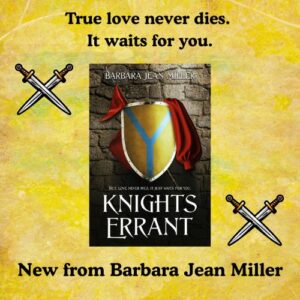
BOOK: Last Ditch

AUTHOR: Barbara Jean Miller

GENRE: Regency Romance

BLURB: When a greedy, scheming relative drives Ellie Waltham and her mother from their home, her brother-in-law Gareth Delaney steps in, but safety is short-lived when Ellie is abducted in an attempt to force her to marry someone she knows intends to kill her so he can claim her inheritance. Only a last-ditch effort by Ellie will save her from certain death.

ABOUT THE AUTHOR: Barbara Jean Miller is an author, educator, and nature observer.

https://barbarajeanmiller.substack.com/


DAVID MOULD 

BOOK: Mission to Madagascar: The Sergeant, the Jing and the Slave Trade

AUTHOR: David H. Mould

GENRE: Historical Biography

BLURB: In 1817, James Hastie, a 30-year-old East India Company sergeant, travelled to the court of Radama, ruler of the most powerful kingdom in Madagascar, to convince him to stop the export of slaves. Radama manipulated the envoy to assert power over the nobility who profited from the trade. Hastie became the British agent, and a trusted advisor to the king. Mission to Madagascar is based on his unpublished journals, one recently discovered. This is the first biography of a man, whom Sir Mervyn Brown, a former UK ambassador and historian of Madagascar, described as “one of the most important figures in the history of Anglo-Malagasy relations.”

ABOUT THE AUTHOR: David Mould, Ph.D., Professor Emeritus of Media Arts and Studies at Ohio University, has published books and articles on a range of historical topics, including news and documentary film in World War One, canals and railroads in the 19th century in the US Midwest, television coverage of the first Gulf War, post-Soviet media in Central Asia, and oral history. Born in the UK, he worked as a newspaper and TV journalist before moving to the US. His essays and articles have been published in Newsweek, Christian Science Monitor, Times Higher Education, History Ireland, History News Network and other print and online outlets. He has published three books on travel, history and culture. He is a frequent presenter at libraries and for adult learning classes.

https://davidhmould.com/


Advertisements


My WriteDay Subscription Box

JOY E. HELD is an author, educator, editor, book coach, entrepreneur, and literary citizen responsible for this site and its contents. She is the author of

Writer Wellness: A Writer’s Path to Health and Creativity (Headline Books, Inc., 2020)

Writer Wellness Workbook: A Guided Workbook and Journal to Accompany Writer Wellness: A Writer’s Path to Health and Creativity (Headline Books, Inc., 2023)

The Mermaid Riot (Fire and Ice YA, 2024) Young Adult Historical Fantasy

She writes spicy historical fiction under a pen name.

She is the winner of multiple writing and book awards:

West Virginia Writers, Inc. Annual Writing Contest, Honorable Mention, Novel, 1998.

New York Book Festival, Honorable Mention, Writer Wellness, 2020.

Next Generation Indie Book Awards, Finalist, Writer Wellness, 2021.

Northeast Ohio Romance Writers of America, Member of the Year, 2020.

Northeast Ohio Romance Writers of America, First Book Award, 2020.

She is an adjunct faculty member in the Southern New Hampshire University Online MFA Creative Writing.

She is a proud graduate of Seton Hill University in Greensburg, PA with an MFA in Writing Popular Fiction.

She is a member of The Authors Guild and the Society of Children’s Book Writers and Illustrators.

Joy is the founder and CEO of My WRITEDAY Subscription Box for writers and readers.

XXXXXXXXXXXXXXX


BOOKS BY MY FRIENDS

This article may contain affiliate links which may result in the author receiving a commission when readers purchase items through the links.

Today we’re featuring authors LAURY A. EGAN, ALLE C. HALL, LYNN SLAUGHTER, and LINDA BALLOU.


BOOK: The Firefly

AUTHOR: Laury A. Egan

GENRE: Romance and coming of age portrait

BLURB: 1964: A dark summer night on a still black lake. A lantern is lit at the end of a dock. A blond girl in white appears and begins to dance, her body illuminated like the fireflies surrounding her. A second girl emerges from a house and is beckoned forward. The two meet, swim, and then kiss, beginning an ethereal romance and a young woman’s journey into adulthood. Robin Bennet, 14, has been abandoned at a lakeside rental. Her parents argue and leave, each believing the other has remained with Robin. Alone, Robin discovers someone has been sleeping in the house and stealing food. A fifteen-year-old, Kieran, the charming intruder, invites himself to dinner. He is the brother of the beautiful girl who magically appeared on the dock the night before. After he departs, the “Firefly” returns, but in the morning she has disappeared, leaving Robin on a quest to find her all the while pursuing her dream of becoming an architect. Heat rating: 2

ABOUT THE AUTHOR: Laury A. Egan is the author of eleven novels, The Firefly; Once, Upon an Island; Wave in D Minor; Turnabout; Once, Upon an Island; Double crossed; The Swimmer; The Ungodly Hour; A Bittersweet Tale; Fabulous! An Opera Buffa; The Outcast Oracle; and Jenny Kidd; in addition to a collection, Fog and Other Stories. Four limited-edition poetry volumes have been published: Snow, Shadows, a Stranger; Beneath the Lion’s Paw; The Sea & Beyond; and Presence & Absence. Eighty-five of her stories and poems have appeared in literary journals.


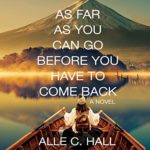
BOOK: As Far As You Can Go Before You Have to Come Back: A Novel

AUTHOR: Alle C. Hall

GENRE: Literary fiction

BLURB: As Far as You Can Go Before You Have to Come Back is a-girl-and-her-backpack story with a #MeToo influence: Carlie is a child sexual abuse survivor. As a teen, she runs away to Asia. Falling in with an international crew of Tai chi-practicing backpackers, Carlie’s journey becomes one to find the self-respect torn from her as a child and the healthy sexuality she desires. Trigger warnings for: child sexual abuse, addictions, and suicide.

ABOUT THE AUTHOR: Nominated for The Pacific Northwest Booksellers Book Award, Alle C. Hall’s debut literary novel, As Far as You Can Go Before You Have to Come Back was winning prizes before its publication, including the National League of American Pen Women’s Mary Kennedy Eastham Prize. The novel was also submitted by the publisher for The National Book Award. Hall lived in Asia and traveled there extensively. She has a daily Tai chi practice that spans 35 years.


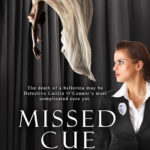
BOOK: Missed Cue

AUTHOR: Lynn Slaughter

GENRE: Mystery

BLURB: While dealing with her own messy personal life, Lieutenant Caitlin O’Connor investigates the most complicated case of her career, the suspicious onstage death of a revered ballerina.

ABOUT THE AUTHOR: After a long career as a professional dancer and dance educator, Lynn earned her MFA in Writing Popular Fiction from Seton Hill University. MISSED CUE (Melange Books) is her first mystery for adults. She is also the author of four award-winning young adult romantic mysteries: DEADLY SETUP, LEISHA’S SONG, IT SHOULD HAVE BEEN YOU, AND WHILE I DANCED. Lynn lives in Louisville, Kentucky, where she’s at work on her next novel, serves on the board of Louisville Literary Arts, and is an active member and former president of Derby Rotten Scoundrels, the Ohio River Valley chapter of Sisters in Crime.


LINDA BALLOU


Advertisements

Revisiting Radway for a Renewing Perspective on the Future of Romance Fiction

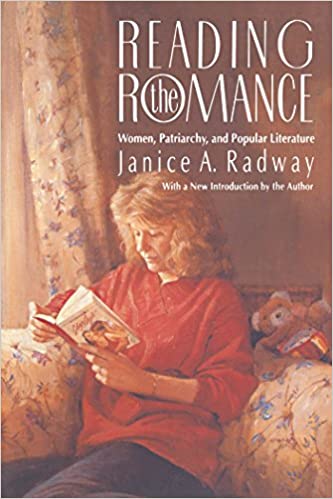
READING THE ROMANCE BOOK COVER JANICE RADWAY_51XX-EHPDSL._SX331_BO1,204,203,200_

Writing in The Cambridge Companion to Popular Fiction, Fred Botting’s piece “Bestselling Fiction: Machinery, Economy, Excess” reminds me that there are two sides to a coin, and I understand that an individual can realistically only see one physical side at a time. When Botting invokes Janis A. Radway’s assertion that women read romantic fiction because of “…an underlying dissatisfaction” (164), I remember that the Radway study is one good source for understanding not only an academic perspective on the topic of why women read romance but for some of the history of my favorite genre.

Revisiting my copy of Reading the Romance: Women, Patriarchy, and Popular Literature by Radway, I was rewarded with a refreshing look at a historical perspective on the popularity of romantic fiction through the lens of how the publishing industry developed in America. Radway provides a thorough yet succinct review of books as a commercial commodity leading me, the reader, from the first printing press at Cambridge (America) in 1639 to how newspapers created a national hunger for serialized stories to the explosion of gothic romance novels in the early 1970s and how that set the stage for the contemporary world of publishing and reading romance.

What Radway reemphasized for me was the cold, hard truth that publishing is a business whose goal is to trade a relative product for the consumer’s money on a repetitive, reliable, and consistent basis. And that the romance novel industry led the way with particular publishers (i.e., Avon, Harlequin, etc.) intentionally seeking out emotionally stimulating content and consciously creating then delivering a targeted advertising campaign to a particular customer base: women. This foundational market took the bait, so to speak, beginning in the 1960s and have been the bedrock of the romance novel buying population ever since.

Radway’s chapter “The Institutional Matrix: Publishing Romantic Fiction” on the history of paperback publishing juxtaposed with the rise of romance reading actually allowed me to understand what Botting expressed in Cambridge Companion Chapter 9 about bestsellers and how the pulp novel industry led to the current state of affairs in popular genre fiction publishing.

Simply put, Radway’s history of publishing chapter (written several years before Botting in Cambridge Companion) culminates with claims that American women did and do devour large numbers of romance novels in order to repeat a specific type of reading experience, but that it isn’t sufficient to say that this is the only explanation for the popularity of the genre and the historically high sales. She makes it clear to me when she states, “The romance’s popularity must be tied closely to these important historical changes in the book publishing industry as a whole” (45).

Whether this ‘reading romance repetition habit’ is due to “an underlying dissatisfaction” with women’s position in the patriarchy as Radway and others propose, there is no definitive conclusion for me to glean except to say that the reading experience can’t be discounted and nor can the direct relationship to the industry at large.

In my opinion, the Cambridge Companion writers echo Radway. Botting ends with external forces-alteration, novelty, and desire-contributing to the production of bestsellers. Another contributor to CC, Erin Smith, wraps up her thoughts in a similar fashion by indicating that production, marketing, and consumption are king. Radway reiterates her accounting of romance novels as a point of consumerism by, what I see as a precursor of Botting and Smith, by claiming, “Commodities like mass-produced literary texts are selected, purchased, constructed, and used by real people with previously existing needs, desires, intentions, and interpretive strategies” (221).

They all agree that bestsellerism is mostly about marketing to consumer desire.

It’s evident to me from these three perspectives that the business of publishing is an important side of the coin. As a genre writer, I must keep a keen eye on it, but that I must also approach my work as marketable merchandise that will slake the buyer’s thirst but will also create a craving (dare I say addiction?) in the reader to return to take sip after sip after sip.

I believe my soon-to-be-released historical romance novel has the potential to quench readers’ thirst for unique historical settings and because I have two characters whose stories I plan to expand on for sequels, the possibility exists for repeat buyers. I’ve done a considerable amount of specific research on the American frontier in the late 1700s, but not everything I learned appears in the first book of the series. I have research and plot ideas in reserve to write at least two more books set in the same time period.

Considering that Radway and Botting point out as imperative the importance of marketing a novel to create long term reader relationships, the challenge for me will be finding historical events and or commemorations to “hook” my stories on to show a publisher that there is valid potential for interest in my themes and stories today and in the future.

All good things,

Joy

Works Cited

Botting, Fred. “Bestselling Fiction: Machinery, Economy, Excess.” The Cambridge Companion to Popular Literature, edited by David Glover and Scott McCracken, Cambridge University Press, 2012, pp. 159-174.

Radway, Janice A. Reading the Romance: Women, Patriarchy, and Popular Literature. Chapel Hill, NC: The University of North Carolina Press, 1991.

“Write what you know”

CURSIVE INK kelly-sikkema-399338

I read, write, and study historical romance. My most recent completed manuscript is 470 pages long and currently designated as “historical fiction with romantic elements.” The distinction is because the couple in the story doesn’t meet (meet-cute) by page five of the novel. This is kind of a burr under the saddle for me because I believe that historical romance readers, no matter how experienced, want and appreciate the world-building and character motivations at the start of a book regardless of how long it takes for the two main characters to eventually collide.

However, the contemporary industry standard of the heroine and hero appearing within the first five pages is applied across the sub-genre board. So, I’m presently stuck with the label of “historical fiction with romantic elements” because a lot has to happen to Molly, Romney, and America before they find each other and start their journey together. I hope that makes sense. At first, I was dismayed by the nomenclature, but I’ve embraced it now because it’s not that big of a deal…until I go agent and publisher shopping. Since I don’t have time to pursue that part of the process yet, I’ve decided not to angst over it. Spoiler alert: Molly and Romney end up together.

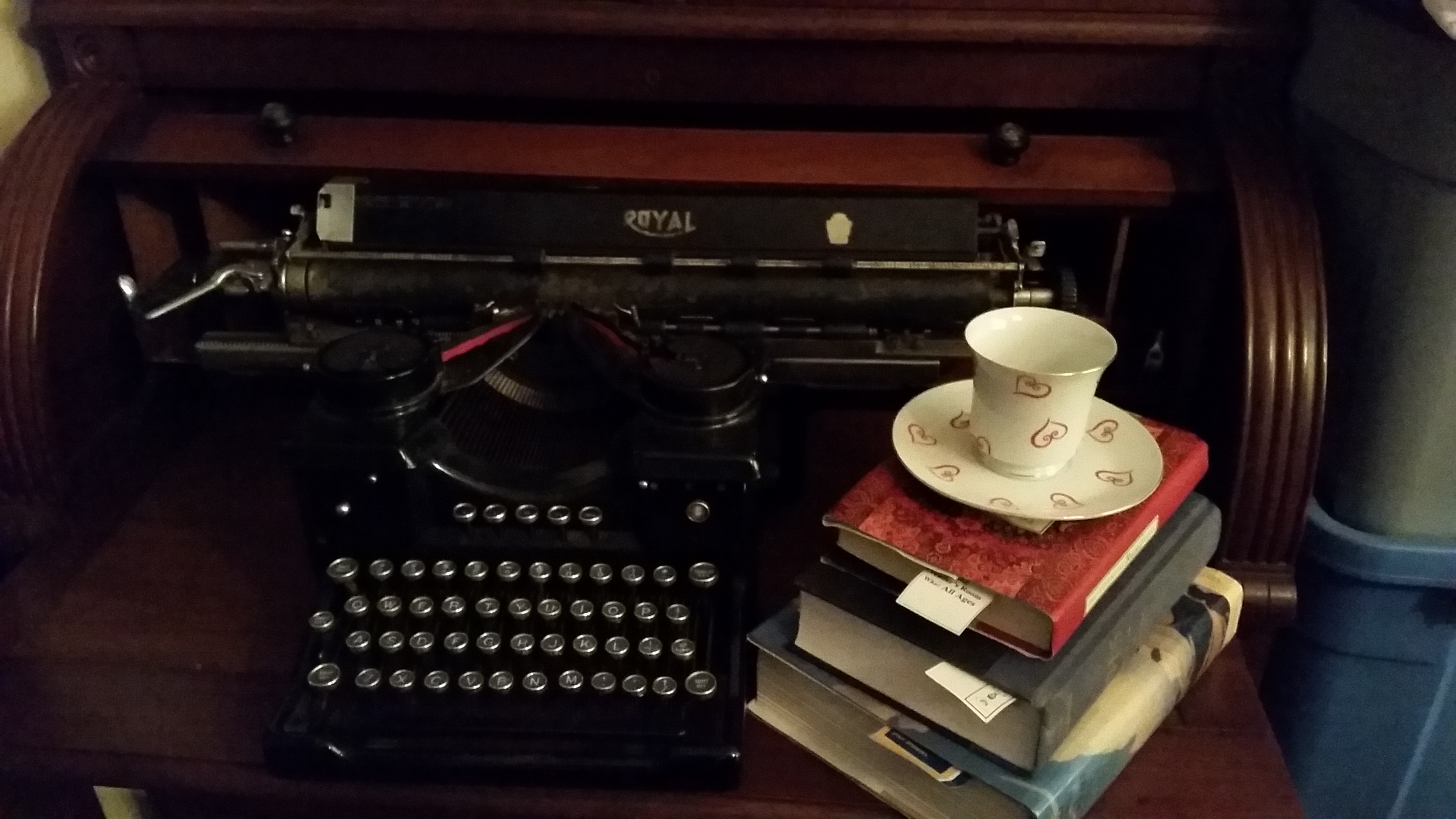
Typewriter045

The book is my response to “write what you know” and to fill a void in historical romance offerings. Frontier America, specifically the Northwest Territory, was a rough era and not viewed by some publishers and readers as romantic enough to be a popular setting or time period. I live and work in the belly of this particular beast, aka The Mid-Ohio Valley, and the research is literally at my fingertips. My house is near the Ohio River where my characters almost drown. I work on the campus of a local college whose library has one of the most extensive Special Collections of pioneer history in the country. There are actual pioneer cabins preserved and on display in a local museum that I drive by every day on the way to work.

However convenient, it hasn’t been easy, but I don’t read, write, and study historical romance because it’s easy. I do it because I’m fascinated with the human project. I’m in total awe of women who cooked without an electric stove or wiped up spills without paper towels or any number of other modern civilities we live by today that were non-existent in early America.

They must have been really strong-willed people driven by something that helped them survive seriously difficult situations so that you and I can be doing this amazing thing (having a meeting of the minds via technology) right now. I think the “something” that propelled and motivated them was love, and I respect the hell out of the men and women who paved the way for me in spite of the mistakes they made. I read, write, and study historical romance out of respect for the past, curiosity about humanity, and the love of words. Most of all, I want to believe that love conquers all. So, don’t burst my bubble, okay?

I’ve gone overboard with telling you a “little” about my project. Now, you understand why my manuscript is so long.

I’m more concerned about the condition of the publishing industry lately than the length of my manuscript. We live in the “United States of Amazon,” and it’s their prowess and whims that have me wondering constantly how to really connect with readers. Publishing is the EASY part thanks to Amazon (and others) literally giving birth and providing respectability to the self-publishing concept, but I worry about getting the message out to pull readers into my books. More on this later.

All good things,

j

JoyHeldHeadshot3