My WriteDay Opens Jan. 5, 2026 for New Subscribers

My WriteDay Subscription Box


Saturday 27 December 2026

Yep. You missed it. The November/December My WriteDay subscription box for writers “Another Perspective” has sold out. I understand. The chaos and money crunch of the holidays made it feel like time won the race again. Everyone on your list got something. That’s good. Now it’s time to do something for YOU!

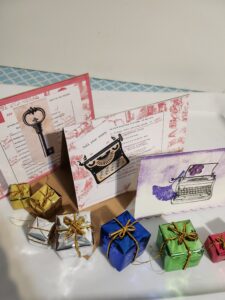
For $59.00, My WRITEDAY is a bi-monthly subscription box containing curated products from authors, creators, and small businesses to writers and readers in the continental U.S. only. (Sorry no international shipping yet.) It’s unique in that many products are sourced from writers who are also crafters and artisans.

Each box delivers a writing craft book and 3-7 items associated with the key concepts (journaling, fitness, relaxation, nutrition, and creative play) of Writer Wellness, my flagship program and book (Headline Books, Inc. 2020.)

Inspired by literary themes, genres, and holidays, boxes include exclusive access to My WRITEDAY Digital Magazine filled with writing and publishing tips, writer wellness ideas, fiction excerpts, poetry, special offers, live virtual meetings, and more.

I have thoroughly enjoyed the My WriteDay subscription boxes. They are filled with useful items and resources for writers and all creatives at all levels. Joy is a talented curator, knowledgeable, supportive, and friendly. I recommend this box to anyone who is interested in writing and wants to boost their creative skills and lifestyle. 

~Jessie M.

Click here to subscribe on MONDAY, JANUARY 5 AT NOON EASTERN STANDARD TIME!


My WriteDay Subscription Box


I hope your WriteDay is fantastic!

~Joy

Founder and CEO, My WriteDay

https://www.mywriteday.com

P.S. Did you know that My WriteDay offers reading and writing adventure kits for kids and teens year-round?

Check it out My WriteDay Teen


Advertisement (affiliate link)


Advertisement (affiliate link)

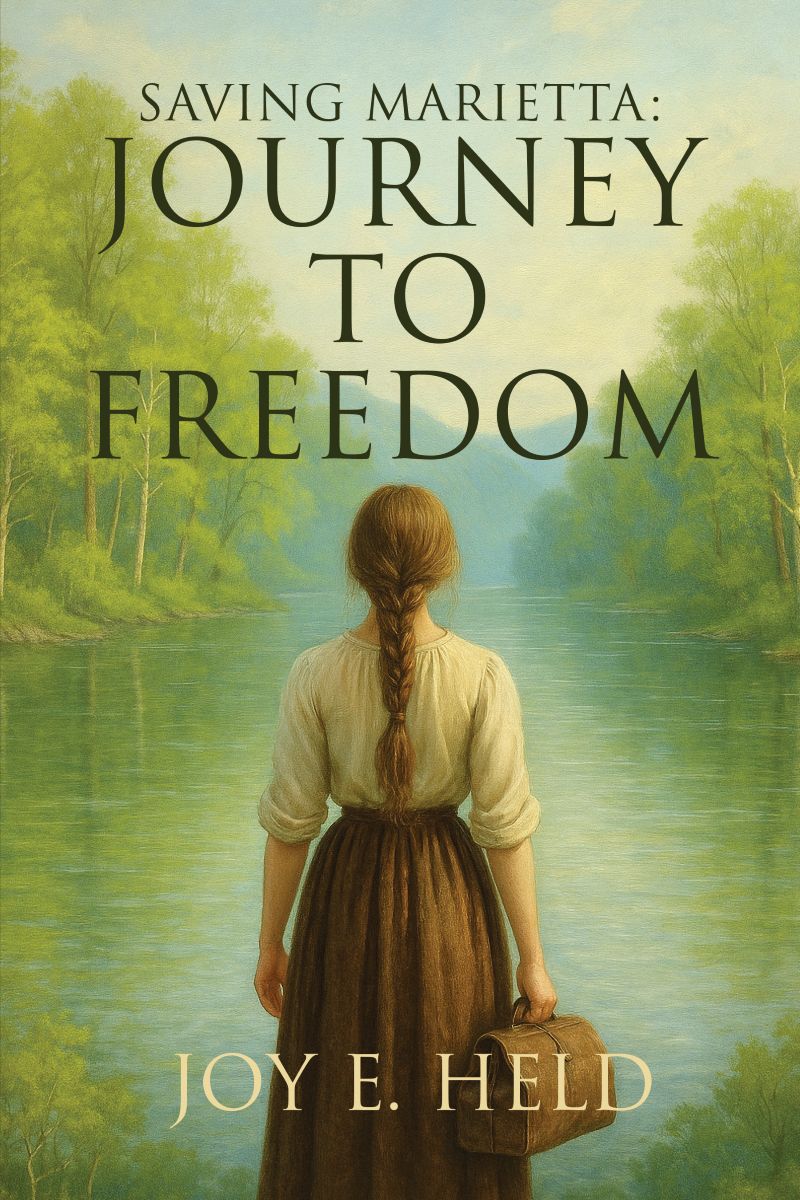
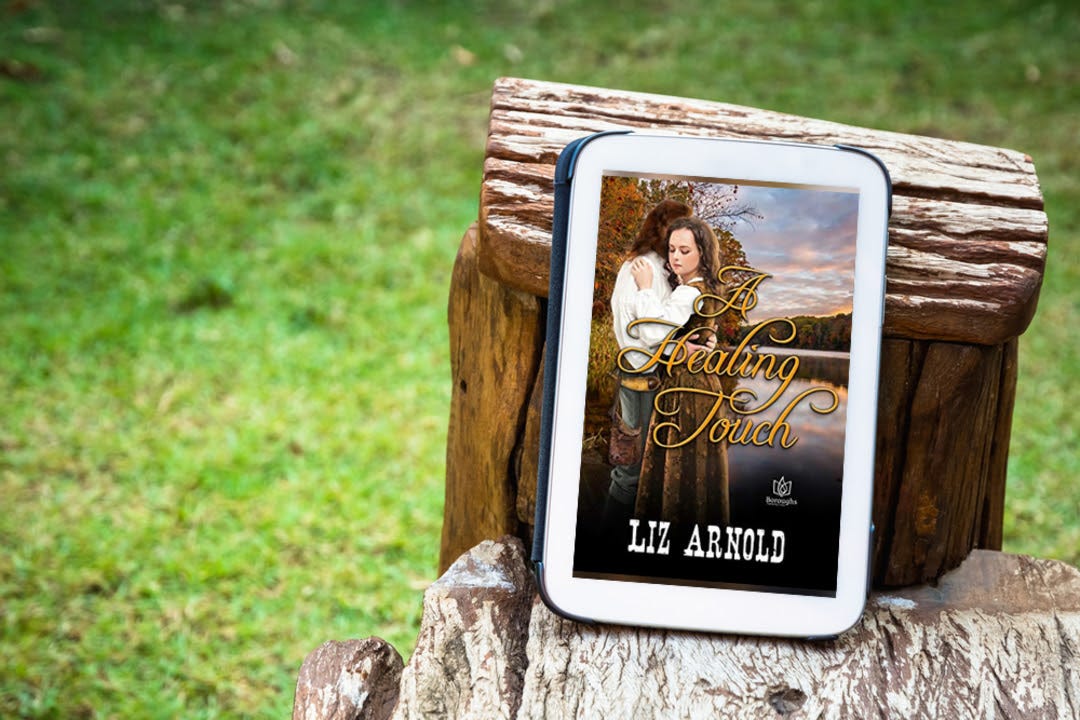
Release February 3, 2026. PreOrder here

Saving Marietta: Journey to Freedom (Book 1)


Your Writing As a Gift to Those You Love & Care About


“Your Writing As a Gift to Those You Love & Care About”

Monday 8 December 2025

Hey there, writer! This year give your writing as a gift to those you love. Lots of crafters give their creations as gifts. Writers can too. Here are some special projects you can quickly and charmingly turn into presents for the holidays.

WRITE A SHORT STORY WITH A RELATIVE OR SPECIAL PET AS THE STAR

Your wonderful talent with words easily translates into a short story or children’s book featuring a relative or special pet as the protagonist. It doesn’t have to be long or have a complicated plot arc, just a story about an adventure or a real-life event in the family history. You know the drill: start with a character with a problem to solve then say, “What if?” Illustrations in a digital book are easier than you think. Family photos from your phone will add personality and images from royalty-free sites such as The Graphics Fairy or iStock will more than supply you with ideas and appropriate art work to support the story.

CREATE A SERIAL STORY WITH A CHAPTER A MONTH

You only have to write one chapter to hook your reader for this gift of writing then write 11 more chapters that you send to the recipient once a month until next November when the romance is fulfilled, the mystery is solved, or the journey is complete.

GREETING CARDS WITH WRITERLY QUOTES, IMAGES, AND MESSAGES

Or the cards can be blank inside. Blank, do-it-yourself greeting cards are available at most craft supply stores such as Michael’s.

OF COURSE, SIGNED COPIES OF YOUR PUBLISHED BOOK

Make this special by adding a letter to the recipient about how much you appreciate everything they do in support of your writing.

HOLIDAY CARDS & LETTERS FOR SERVICE MEMBERS

As the daughter and wife of members of various branches of the military, I think this gift of writing is one of the best you can offer. Thoughtful messages of support and appreciation are welcome. Places to submit include (check the deadlines at the websites):

Military Holiday Card Challenge

Wounded Warrior Project

Happy writing and happy holidays!

~Joy


This article may contain affiliate links which may result in the author receiving a commission when readers purchase items through the links.

You are receiving this message because you previously signed up for notifications or participated in a program/course with Joy. You may unsubscribe at any time.

My ideas are not ever meant as a substitute for consulting with a qualified health professional.


Advertisement


JOY E. HELD is an author, educator, editor, book coach, entrepreneur, and literary citizen responsible for this site and its contents.


Buy me a coffee

XXXXXXXXXXXXXXXXXXXXX

DRACULA WEEK ’25: IF DRACULA KEPT A DIARY

Friday 31 October 2025

#5 If Dracula Kept a Diary


May 2-Rainy as usual, but maybe that will clean the drive path in front of the castle before Mr. Harker arrives tomorrow. I wish he hadn’t left London so late. Something about trial notes to finish. It is a long journey to Transylvania. With only one stagecoach every day it will be the middle of the damn night when I get him back here. Must remember to put brandy and an extra blanket in the carriage. I hope that ridiculous woman at the Golden Krone remembers to give Harker my letter.

May 4-Snow. A little early for this kind of chill, which keeps the peasants out of the forest. Makes things more challenging, but I’ll manage. Englishmen require too much luggage! How long does H think he’s staying here? H is paler than I expected. But I like the look. And afraid of my dogs. I thought he’d never stop quivering on the ride up the mountain.

May 5-H liked the baked chicken and drank an entire bottle of wine for supper.

May 8-H cut himself shaving. I nearly lost it. He didn’t need to shave for me, but it caught me off guard. Suddenly, I couldn’t control myself. Why in the hell is the Englishman wearing a crucifix of all things and where did he get it? The zap also caught me off guard. I regret throwing H’s shaving mirror out of the window. I just couldn’t stop myself.

May 16-Certain H saw me leaving the other night. I told him not to wander around the castle. I told him to stay in his room and not to fall asleep in any other room. It’s his own fault. If I hadn’t smelled his fear, I might not have made it to his rescue. Those girls will be the death of me. This man does not follow instructions well. I hope he hasn’t made careless errors on my London property purchase. Ah, what’s done is done. This man is mine, ladies.

June 1-Had to hide all the paper. Judging from H’s journals, he is pretty shook up about having to stay here another month. I could let him write that letter for help he craves and tell him I mailed it for him. Not. Decided to get his traveling clothes cleaned for him. I think I forgot to tell him this.

June 30-Damn! He found me in the shipping crate. Meddlesome fool. Do all English lawyers behave so badly? Have to go to London without him for now. Why does everything have to be such a bother?

***

…until next year…


DRACULA WEEK ’25: UNRELIABLE NARRATORS & STAKE DRIVERS

Thursday 30 October 2025

#4 Unreliable Narrators & Stake Drivers

I love epistolary fiction. Reading the letters, journals, diaries, and newspaper clippings allow me a deeper connection to the writer. I learned the habit from doing research for my historical fiction novels. I also really love special collection departments and their librarians. Special collections librarians are amazing sources of information and always ready to help a writer or student with research. Another topic for another day.

Consequently, I am drawn to collecting and reading the diaries and letters of published authors. I enjoy reading about what was going on in their lives and the world when they worked on a particular book. I’m currently rereading A Writer’s Diary written by Virginia Woolf and published/edited by her husband after she died. I love Journal of a Novel: The East of Eden Letters by John Steinbeck and have just started reading Letters of Edna St. Vincent Millay. I haunt used book sales for the older versions of these kinds of books because there is less editorial commentary than there is in contemporary reprints of such works. I like to come to my own conclusions.

This passion partially explains why I annually reread Dracula by Bram Stoker. I’m not so enamored of vampire literature. It’s the journals, letters, and newspaper clippings that Stoker uses as a narrative technique that draw me to the book. I’m more interested in the style and conventions he chose to tell the story with over the romanticism of vampiric folklore. While the diaries and journals of published authors are written in their own hand, it’s a straightforward connection to a new perspective on their published works. In Stoker’s case with Dracula, he chose one of the most difficult literary conventions. The unreliable narrator.

The unreliable narrator in literature is exactly what it says: a character telling a story, but you shouldn’t trust everything that character says. And what better way to stay true to a character’s viewpoint (and their own opinions about themselves and the story’s actions) than explaining the plot through their fictitious accounts—their diaries?

Some people tell the truth in their personal writings. Others are prone to embellishments. Everyone expresses an opinion about what happened. That’s called reflective writing. It is cathartic and authentic, written from the heart and emotions but not always from the intellect or common sense. Personal writing is for the writer at the time, although they generally have a suspicion that someone will read their journals after the holder of the pen has died. I write notes in my journals all the time to my children and grandchild for them to read long after I’m on my way to whatever is next after this part of my karmic journey.

The other interesting problem Stoker chose is that because of the “personal” writings used to tell the story, the author himself is forbidden to provide narrative comments on what the characters are saying and doing. He can’t narrate or explain anything in his own book because he can’t interfere with what the characters are writing then doing. He must stand back, relay the writing and deeds, then leave it to the reader to conclude as they will. Until you realize Stoker IS offering narrative commentary because he is the one writing the journals of his characters.

Each character in Dracula is unreliable because they have personal agendas that Stoker wants the reader to recognize-social justice, high morality, sexual repression, and the greater good of society. They each wish for a position in life other than what they are shackled to. They don’t want to be who they are and feel compelled to lash out at something they consider evil to assuage their own unhappiness. Happens all the time. However, most unhappy people complain in their journals and letters then go out into the world and act as normal as possible even if they secretly want to drive a stake through the heart of the devil. That’s what fiction is for.

Be well, write well!

~Joy

(Image Graphics Fairy)


DRACULA WEEK ’25: SMOKE & MIRRORS

Wednesday 29 October 2025

#3 Smoke & Mirrors


Have you ever been backstage at a theatre production? In the performer’s dressing room, and many times in the side wings where they wait to go on stage, are a lot of mirrors.

Dancers have a misguided reputation for being vain because they rely on mirrors as they train. Supposedly, a dancer can’t walk by a large window or even the tiniest mirror without a sideways glance at themselves. Some habits are harder to break than others.

The showstopping musical number from the Broadway musical A Chorus Line is sung by the lead character, Cassie, who is the aging chorus girl trying to make a comeback. “All I ever needed was the music and the mirror and the chance to dance for you.” Yep. That’s an amazingly accurate statement about what being a dancer means. The actress Donna McKechnie put this song and dance number on the eternal map of musical theatre’s most powerful performances because her passion for dancing, initially ballet, had nourished her soul from a very young age.

There’s no shortage of commentary and speculation about why or what Stoker intended by writing Count Dracula as invisible in mirrors. No soul. Not living. Ashamed of what he’d become. Violent at the thought of anyone looking at their reflection saying, “And this is the wretched thing that has done the mischief. It is a foul bauble of man’s vanity. Away with it!” He throws the shaving mirror out the window to shatter on the cobblestones below. As if shards of a mirror are acceptable while the whole is not?

The folklore surrounding mirrors could have influenced Stoker, but as I mentioned, writers gather and weave strands from everywhere for a long time before something appears in a story. Yes, the soul of a person is a major theme in Dracula but recall Stoker’s career as a theatre critic and business manager. Whether or not Stoker ever acted in a play isn’t documented, but once he got an all-access pass to the inner workings of what it means to be an actor, he had to have been awed by a performer’s reliance (and sometimes addiction) to their own reflection. Stoker was and never dropped his role as a critic. Someone who offers feedback to a performer…just like a mirror.

The phrase “smoke and mirrors” has been a theatrical technique since the late 18th century when magicians used it to project an image onto smoke to make the image look as if it were floating, shimmering, or hovering. If that image happened to be a person, they were called spirits and ghosts. Fast forward and the words suggest that what someone is seeing or being told should be investigated vigorously to be sure there is truth there. It’s been a go-to idiom in political commentary since the 20th century. Stoker had to have encountered the practice in 19th-century theatre because it was a very popular stage trick to make the audience believe in something that actually didn’t exist.

See where is leading?

Mirrors (not fun-house distortions) tell the truth. No matter how tiny the shard, the reflection is an exact image with an unbiased, untainted message (wicked Queen in Snow White exempted from this discussion.) This is precisely what you look like and the first impression others will have of you. That truth is the reason performers are trained to use mirrors as a means to improve and as a way to see what needs correcting. Look in the mirror. Pants unzipped. Zip. Go out on stage. The mirror also cuts down on what the critic has to complain about. All the world is a stage.

When Jonathan Harker looked into the mirror to shave then felt Count Dracula’s hand on his shoulder (a common place for the imaginary characters of angel and devil to sit) he cut himself with the razor because the “visitor” surprised him. Snuck up on him. Harker claims to have been able to see the whole room in the reflection, but he didn’t see the physical embodiment of the devil behind him. He only felt his presence in his own physical body.

First lesson in smoke and mirrors: be careful what you project for it has a truth all its own.

Be well, write well!

~Joy

(Image Graphics Fairy)


DRACULA WEEK ’25: STOKER’S DAY JOB

Tuesday 28 October 2025

#2 Stoker’s Day Job

Okay, so where did author Bram Stoker get the idea for the character Count Dracula? Seems like a simple enough question, but writers are not the most straight-forward of folks. We tend to noodle around as famed writing teacher Brenda Ueland called it until we finally arrive at the words “The End.” To think that there is a definitive answer to how Stoker created his main character is to ignore the life of the writer.

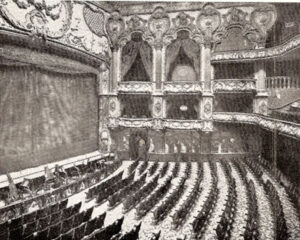
Bram Stoker’s day job was as the business manager to actor Henry Irving and later the Lyceum Theatre in London, England which Irving owned.

Lyceum Theatre

Before exploring how Stoker’s “real” work might have influenced his writing, let’s do a quick overview of his life.

Born: November 8, 1847 in Dublin, Ireland (Irish and a Scorpio.)

Education: 1870 Bachelor of Arts in mathematics (?) from Trinity College

First day job: Civil servant working in Dublin Castle for the British royals

First side hustle: Unpaid writer and theatre critic for the Dublin Evening Mail newspaper

First professional turning point: 1878 Because of Stoker’s review of Hamlet’s Shakespeare published in the newspaper, he meets acclaimed actor Henry Irving who offers Stoker a job as the business manager for Irving and the famed Lyceum Theatre in London

Personal life: 1878 Marries actress Florence Balcombe (who had previously been engaged to Oscar Wilde)

One child: 1879 Irving Noel Thornley (notice that Stoker’s only child is named after his boss Henry Irving)

Dracula: 1897 Published in England; 1899 published in America

Literary career: 1902-1911 Continues writing and publishing novels, lectures, & nonfiction

Deceased: April 20, 1912

To begin with, I’m impressed by a writer who can do math, but the university he obtained a Bachelor of Arts from is vague about the emphasis of the degree. Stoker claimed he graduated with “Honors in Pure Mathematics” then went on to keep the books for a major theatre company. Works for me. Obviously, Stoker was that creator.

He became interested in theatre in college but was known as an exemplary athlete in several sports. He must have recognized the importance of making a living and spending personal time on less lucrative endeavors such as writers. Reading Stoker’s life reminds me of Steven King’s beginnings as a school maintenance worker who wrote in the evenings. It’s no surprise then that Stoker worked the day job to pay the bills while writing pro bono for a local publication. Between his education and work experience and interest in theatrical arts, Stoker did what most writers do: endure reality to support our fantasies.

What does a theatre business manager do? They watch the bottom line like a hawk making sure that there is money enough to keep the actors paid and clothed and the audience intrigued enough to buy tickets. Henry Irving was one of the most famous, sought-after actors of the time. He was too busy at his craft to bother with these all-important tasks. Without the building, lights, costumes, advertising, and a script, Irving was nobody. He knew enough to hire an astute and admiring assistant. My own work history includes more than one stint as a business manager for a local ballet company followed by a stint as the personal manager of a popular ballet teacher. I performed exactly the tasks Stoker did for Irving: correspondence, advertising, travel arrangements, negotiations, purchases of everything from food to shoes to reading materials, and much more. All while continuing my freelance work as a dance writer.

The life of an actor (or dancer, musician, author) then and now depends on ticket sales. Tickets are bought because of notoriety. The public will pay for a ticket stub and the bragging rights to be able to say that they saw so-and-so live and in person on stage. Swell. But the pace and the stress are exhausting. It is a blood-sucking existence because fame is fleeting, and artists know it. When a person is at the top of their game, that’s when the fans want to see them. Scheduling and traveling are grueling because an artist never knows when the public will turn away to follow the next fad. The managers are just as used up as the artists.

Then what?

Exactly. Most of the time, there is no notice, no date when an actor’s fame fades. It is usually a gradual thing like the ebb and flow of low tide on the beach when most sun worshipers are inside having dinner. No one is on the sand to witness the slow rise and gentle recline of a weak little wave as it barely wets the sand on its way in then out for good. Until another bigger, grander, wider, more expansive wave comes in later. Does a surfer run for a ripple? No. The crowd swells for a big swell. It’s that way with performers and their managers.

What happens next is the time to realize how exhausted on every level you are, be it performer or support staff. It can be months before energy returns. It can be years before you feel like working at all. After the hustle and adrenaline rush of a performance career, the after party is more like a car running out of gas in the middle of the highway. There is no juiciness left. There is no life force left. You feel as if the blood that used to pump through your veins and kept you on the cutting edge has been literally sucked out of you and all you have left is a carcass not good for much of anything.

“Kiss today good-bye” is a true and famous line from the song “What I Did for Love” from the Broadway musical A Chorus Line. ACL is about the fleeting life of dancers in the chorus line. Although ACL was written in the 1970s, the feeling of nothingness when the career is over is what we humans believe to feel like being dead. The walking dead. The un-dead as Bram Stoker originally titled his novel eventually called Dracula.

A Dracula sucks the life out of another being so that Dracul can go on living. The theatre will suck the life out of the players so that it can go on existing. Did Stoker’s thankless day job as a business manager to a famous actor make him feel as if the fluid of life, his blood, had been drained from his body? We all do something for love at least once in a lifetime.

Be well, write well!

~Joy

(Image The Graphics Fairy.)


DRACULA WEEK ’25: DRACULA IS A ROMANCE??

Monday 27 October 2025

#1 Dracula is a Romance?

One day my mentor in graduate school said to me, “Consider the book Dracula as a romance novel.” As a romance author myself, it hadn’t occurred to me to view this enduring work as a romance novel, but as one of my favorite all-time books, Bram Stoker’s Dracula rates high for me. The rating is based on the facts that I adore epistolary fiction and no matter how many times I read Dracula, I find something new or different to think about. Why couldn’t I see Dracula as a romance novel?


The left side of my brain immediately reminded me of the eight elements of the romance novel defined by educator and researcher Pamela Regis in her book A Natural History of the Romance Novel (University of Pennsylvania Press, 2003.)


  1. society defined
  2. the meeting
  3. the barrier
  4. the attraction
  5. the declaration
  6. point of ritual death
  7. the recognition
  8. the betrothal


My mentor’s intriguing statement got me looking at Dracula in a different way. Right away, I ran into a brick wall. Who are the love interests in the story? The standard romance tropes require that two individuals develop an attraction followed by overcoming obstacles resolved by culminating in an agreement between the parties to make changes necessary to commit to a lasting relationship.


Now you may be thinking, “The obvious romantic couple is Miss Mina Murray and Jonathan Harker because they end of happily married and with a son they name after the man who gave his life to save them.” As a matter of fact, Stoker tries to tie up several relationships at the end of the book explaining that Godalming and Dr. Seward live and are also “both happily married.” And yes, the final remarks of that stalwart Van Helsing point to maybe Stoker wanted readers to see the story of Dracula as a romance with a happy ending:


“We want no proofs; we ask none to believe us! This boy will some day know what a brave and gallant woman his mother is. Already he knows her sweetness and loving care; later on he will understand how some men so loved her, that they did dare much for her sake.”


Doesn’t this sound like the end of a romance novel to you? It does to me, but I must admit that other elements of the story stand out so vividly for me that seeing a love story as the main idea hadn’t crossed my mind until those words from my mentor.


What do you think? Can you sink your teeth into the idea of the novel Dracula as a romance? Why or why not?

Be well, write well!

~Joy

(Image Graphics Fairy)

XXXXXXXXXXXXXXXXXXXXXXXXXXXXXXXXXXXXXXXXX

JOURNAL-TO-GO-BAG SHAKES THINGS UP IN A GOOD WAY

JOURNAL-TO-GO-BAG SHAKES THINGS UP IN A GOOD WAY

12 April 2025

To refresh your memory, my author platform for over 30 years has been the health and well-being of creative people, especially writers. Writer Wellness: A Writer’s Path to Health and Creativity was my first published book in 2003 after several years of presenting workshops on the topic. The book is in its third edition and with a third publisher because the previous hosts closed up shop. Publishing is a chaotic business and not for the faint of heart or the impatient. Writer wellness is a way to embrace and thrive within the chaos.

The five key concepts of writer wellness are journaling, exercise, relaxation, nutrition, and creative play. As publishing and authoring evolve, I like to regularly remind creatives to follow good self-care practices in order to support their work and health. This post includes tips for journaling.

JOURNALING

Everyone goes through a journaling slump. Regardless of dedication to the practice, it can become stale or mundane. It happens. Don’t take it as a sign of time to stop. A journaling slump is time to explore the page beyond the norms. Instead of documenting the events of the day, write the list in your journal and title it “Today’s Goals” then check everything off with an X or a check mark. This is a positive way to look at a repeat practice.

Another helpful activity is to change up the place where you journal. I regularly like to go to a coffee shop or the library to journal to shake up my surroundings and what I journal about. One thing I do is LEAVE MY JOURNAL AT HOME and take blank paper to the new spot. I do this because I don’t want my regular journal to be misplaced. Once I’m home, I staple, glue, or enclose the pages in a cellophane envelope and add stickers then attach the whole thing to a page in the regular journal.
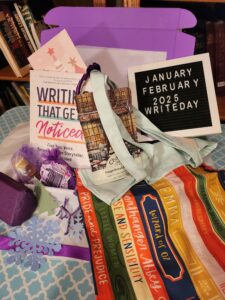
“Journal-to-Go-Bag” is a must and makes journaling in a new place easy. Fill a tote with the essentials such as blank paper or a notebook, pens, and markers and keep it always ready to go. I also include a roll or two of washi tape in case I find ephemera or interesting things at the location to add to my pages.

Up Next: Taking care of your physical body with regular exercise keeps your brain in shape too!

Sign up for my weekly e-newsletter by filling out the form HERE. Or scroll to the bottom of this page! Thanks in advance!

NEWSLETTER

Be well, write well.

~Joy

MY WRITEDAY SUBSCRIPTION BOX CART OPENS MONDAY, MAY 5. Don’t miss out on this fun box of writerly goodness lovingly called by one subscriber “A treasure trove for writers.” The May/June box is called “The Writing Coach.”


Advertisement
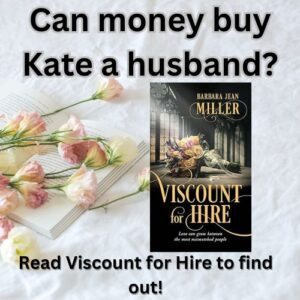
The wealthy Kate Hamilton must marry the wounded viscount she is sheltering in her London townhouse since saving his life has ruined her. But he is a perfect candidate since he needs to marry well. When he seems reluctant, Kate proposes hiring him as her husband to disguise her love for him.

Hugh Bartram, Viscount of Dancy, has never met anyone like levelheaded Kate, thrusting herself into a scandal to save his sister from gossip. He resents Kate trying to solve everything with money, even as he admits her heart is in the right place.

Just as they wed, his sister elopes, and Dancy is captivated by the unconventional Kate as they ride across England together to prevent another scandal.


This article may contain affiliate links which may result in the author receiving a commission when readers purchase items through the links.

You are receiving this message because you previously signed up for notifications or participated in a program/course with Joy. You may unsubscribe at any time.

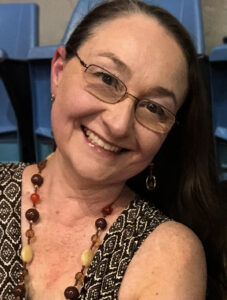

JOY E. HELD is an author, educator, editor, entrepreneur, and literary citizen responsible for this site and its contents. She is the author of

Writer Wellness: A Writer’s Path to Health and Creativity (Headline Books, Inc., 2020)

Writer Wellness Workbook: A Guided Workbook and Journal to Accompany Writer Wellness: A Writer’s Path to Health and Creativity (Headline Books, Inc., 2023)

The Mermaid Riot (Fire and Ice YA, 2024) Young Adult Historical Fantasy

She writes spicy historical fiction under a pen name.

She is the winner of multiple writing and book awards:

West Virginia Writers, Inc. Annual Writing Contest, Honorable Mention, Novel, 1998.

New York Book Festival, Honorable Mention, Writer Wellness, 2020.

Next Generation Indie Book Awards, Finalist, Writer Wellness, 2021.

Northeast Ohio Romance Writers of America, Member of the Year, 2020.

Northeast Ohio Romance Writers of America, First Book Award, 2020.

She is an adjunct faculty member in the Southern New Hampshire University Online MFA Creative Writing.

She is a proud graduate of Seton Hill University in Greensburg, PA with an MFA in Writing Popular Fiction.

She is a member of The Authors Guild and the Society of Children’s Book Writers and Illustrators.

Joy is the founder and CEO of My WRITEDAY Subscription Box for writers and readers.



BOOKS BY MY FRIENDS

This article may contain affiliate links which may result in the author receiving a commission when readers purchase items through the links.


Today we’re featuring authors NANCY HAYES KILGORE, KATHIE GIORGIO, & FRAN HAWTHORNE.


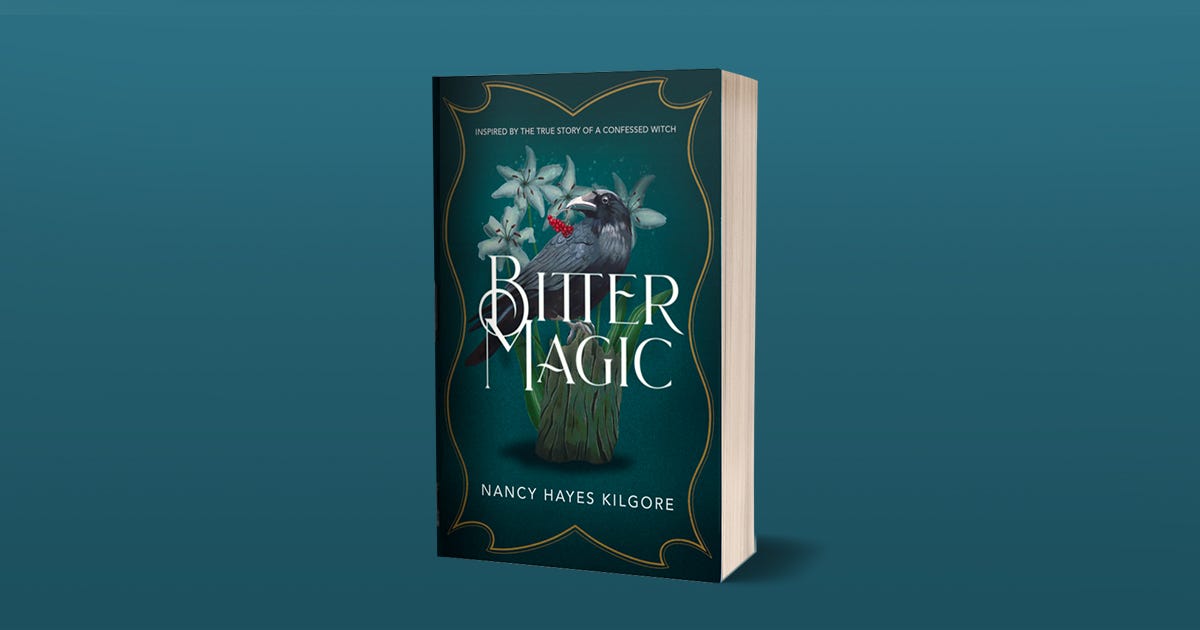
BOOK: Bitter Magic

AUTHOR: Nancy Hayes Kilgore

GENRE: Historical Fiction

BLURB: Bitter Magic, inspired by the true story of Isobel Gowdie and her witchcraft confession, reveals a little-known corner of history—the lives of both pagan and Protestant women in the Scottish Reformation of the 1600s as witch trials and executions threatened their lives, values, and beliefs.

The story is told by Isobel herself and also by Margaret Hay, a fictionalized seventeen-year-old noble woman. When Margaret stumbles across Isobel one day, it seems as though Isobel is commanding the dolphins in the ocean to dance. Margaret is enchanted. She becomes interested in Isobel’s magic, in fairies, and in herbal remedies; Isobel freely shares her knowledge. While Margaret worries that being around Isobel could be dangerous, she also respects Isobel’s medical successes and comes to believe that acknowledging the efficacy of herbal remedies or believing in fairies does not challenge her Christianity.

ABOUT THE AUTHOR: Nancy Hayes Kilgore, BITTER MAGIC (Sunbury Press, 2021,) is the author of two other novels, WILD MOUNTAIN (Green Writers Press, 2017) and SEA LEVEL (RCWMS, 2011). Her writing has won the Vermont Writers Prize and a ForeWord Reviews Book of the Year Award. Nancy is a graduate of the Radcliffe Writing Seminars and holds a Master of Divinity degree and a Doctorate in Pastoral Counseling. She is a writing coach, psychotherapist, and former parish pastor, and leads workshops on creative writing and spirituality.


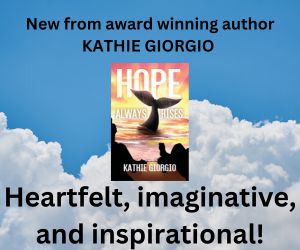
BOOK: Hope Always Rises

AUTHOR: Kathie Giorgio

GENRE: Literary Magical Realism

BLURB: In Heaven, there is a gated community for those who end their lives. This is a surprise to Hope, who ends her life on the banks of the Fox River in Waukesha, Wisconsin. Hope never knew what caused her sadness. God reassures her he does, but he won’t reveal it. Yet.

ABOUT THE AUTHOR: Kathie Giorgio is the critically acclaimed author of seven novels, two story collections, an essay collection, and four poetry books. Awards include Pushcart Prizes in fiction and poetry, the Outstanding Achievement Award from the Wisconsin Library Association, the Pencraft Award for Literary Excellence, and the Eric Hoffer Award In Fiction.


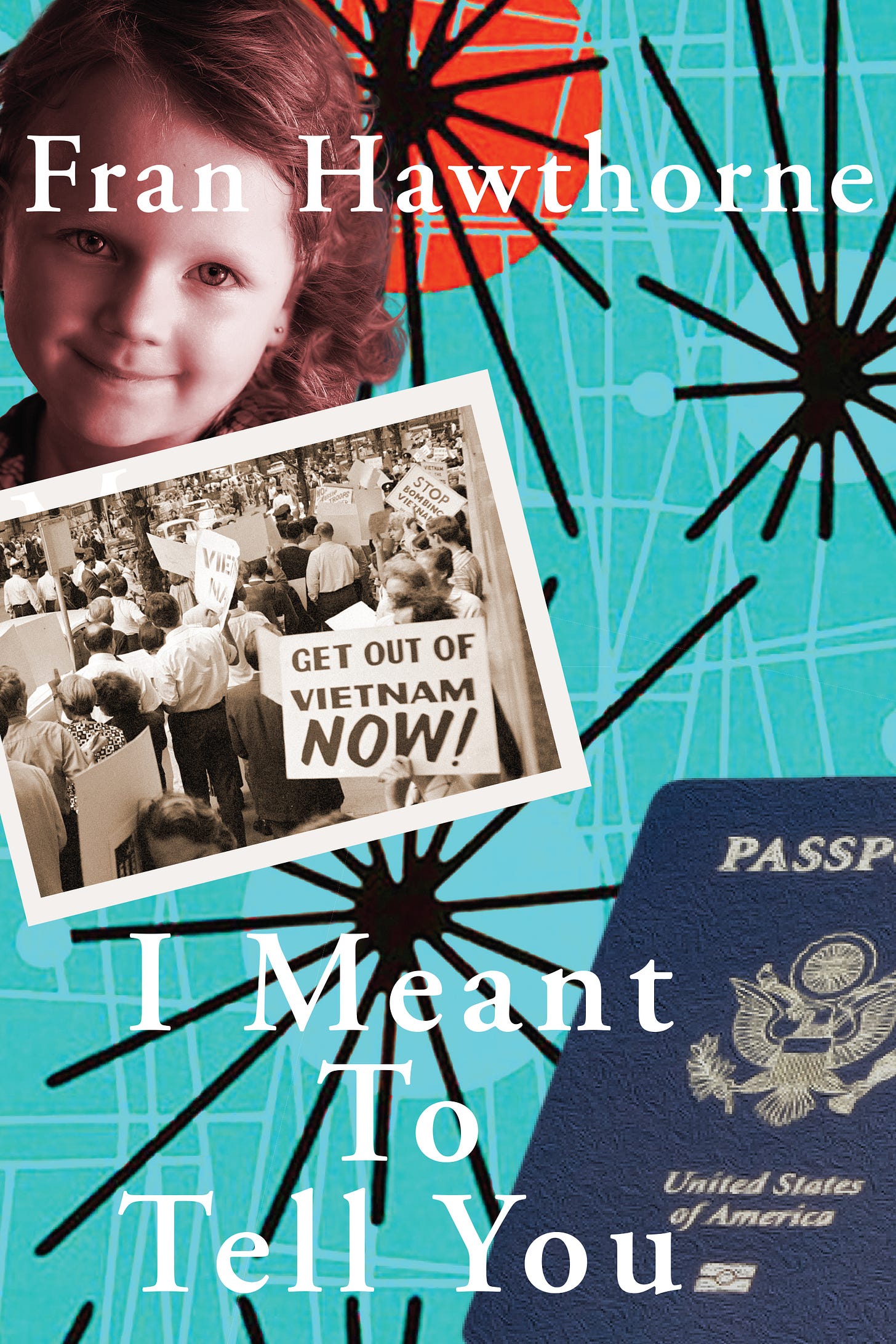
BOOK: I Meant to Tell You

AUTHOR: Fran Hawthorne

GENRE: Contemporary Upmarket Fiction

BLURB: When Miranda Isaac’s fiancé, Russ Steinmann, is being vetted for his once-in-a-lifetime dream job in the U.S. attorney’s office, the couple worries that Miranda’s parents’ history as political activists in the Sixties could jeopardize Russ’ security clearance. But the real threat emerges when Russ’s future boss discovers that Miranda was arrested for felony kidnapping nearly a decade earlier—an arrest she’d never revealed to Russ.

Miranda tries to convince Russ she was only helping her best friend, Ronit—caught up in a nasty custody battle—take her daughter to visit her parents in Israel. As Miranda struggles to prove that she’s not a criminal, she either makes matters worse or stumbles into more secrets. With everything she thought she knew upended, Miranda must face the truth about her family, herself, and her future marriage.

ABOUT THE AUTHOR: Fran Hawthorne has been writing novels since she was four years old, although she was sidetracked for several decades by journalism. During that award-winning career, she wrote eight nonfiction books and was an editor or regular contributor for The New York Times, Business Week, Fortune, and many other publications. But Fran never abandoned her true love: Her debut novel, “The Heirs,” was published in 2018, and now I MEANT TO TELL YOU (published last November by Stephen F. Austin State University Press) has already won or is a finalist for seven awards. Fran is at work on two new novels and also writes reviews for the New York Journal of Books.


Advertisements


BOOKS BY MY FRIENDS; TAD CRAWFORD, ZOE TASIA, & CHRIS COURTNEY MARTIN

This article may contain affiliate links which may result in the author receiving a commission when readers purchase items through the links.

Welcome to Books By My Friends (BBMF) where I host various authors and their work.

Today we’re featuring authors TAD CRAWFORD, ZOE TASIA, and CHRIS COURTNEY MARTIN


BOOK: On Wine-Dark Seas: A Novel of Odysseus and His Fatherless Son Telemachus

AUTHOR: Tad Crawford

GENRE: Historical Fiction

BLURB: Here is a brilliant recounting of the life of Odysseus after his safe return to the island of Ithaca, his wife Penelope, and his son Telemachus. Countless readers and listeners have thrilled to the adventures of Odysseus in The Iliad and The Odyssey, but what further adventures awaited him after his ten years of war and ten years of wandering?

Narrated by Telemachus to the bard Phemios, On Wine-Dark Seas speaks of the human drama of a man gone twenty years from home and family, a man who saw Troy on the night of its destruction, a man who lives the special quest which is his destiny. In probing the inner journeys of a son and father separated twenty years who must come to terms with each other and their ruthless slaughter of the suitors of Penelope, it reveals the doubts and joys of Odysseus, Penelope, and Telemachus.

ABOUT THE AUTHOR: Tad Crawford is the author of A Floating Life: A Novel as well as The Secret Life of Money and a dozen other nonfiction books. His lectures have brought mythology alive at venues such as the New York Open Center, Wainwright House, and the Analytical Psychology Club of New York. The recipient of a National Endowment for the Arts award, Crawford is the founder and publisher of Allworth Press. He lives in New York City.


BOOK: Kilts and Catnip (The Shrouded Isle Book 1)

AUTHOR: Zoe Tasia

GENRE: Fantasy

BLURB: Becca Shaw visits a Scottish island where there’s a doorway to a magical world. Local Greg Gillie keeps everyone safe from the fae living there. Since Becca’s arrival, magic attacks have increased. The two must work together to stop the fae as they navigate growing feelings for each other. Note from the author: Kilts and Catnip is a sweet and wholesome fantasy romance.

ABOUT THE AUTHOR: Zoe Tasia lives in Texas with her understanding Greek husband and a crazy cat where she explores her imagination as a writer. When she’s not giving her imaginary friends full rein, she enjoys the opera, ballet, well-chilled champagne and books, lots and lots of books.


BOOK: THE BOOK OF I.P. (Idle Poems)

AUTHOR: Chris Courtney Martin

GENRE: Poetry/Prose Chapbook

BLURB: ‘THE BOOK OF I.P. (Idle Poems)’ is a hybrid poetry and essay chapbook collection that is “ironic in concept, sincere in content” as it deconstructs prescribed best-practices for getting ideas greenlit as a screenwriter and what it means to possess a producible and worthy story. Note from the author: Some adult language and themes, PG-13

ABOUT THE AUTHOR: Chris Courtney Martin is a Black Queer multidisciplinary artist and psychic medium originally from Philadelphia. Martin’s produced screenwriting credits include short independent projects starring talents such as Sheryl Lee Ralph and Niecy Nash, as well as the animated YouTube series ‘SOMETHING SCARY’. After a multi-awarded screenwriting trajectory, the artist pivoted to literature. Their debut poetry/prose chapbook ‘THE BOOK OF I.P. (Idle Poems)’ is available in print on Amazon, via Alien Buddha Press. A second, full-length collection called ‘SLAM POEMS FOR MY BATHROOM MIRROR…And Other Selected Works…’ is due to launch in October of 2023. Martin also releases music under the name KWEAN OONTZ and debuted with the ‘A KWEAN OONTZ NOVEL’ MicroAlbum in June 2023, to positive international critical reception.


Advertisements